IT architecture building blocks

On this page

Information systems need four building blocks

An information system needs more than an application or a database. People need devices, devices need operating systems, servers provide shared processing and storage, and network infrastructure lets these parts communicate.

Questions about identifying a component or explaining access to shared information use these relationships. The four building blocks solve different parts of one problem: running applications, providing shared resources, moving data, and giving people a way to use the system.

Cloud service and deployment models places these same resources into IaaS, PaaS, and SaaS. Its cloud framework is identified in NIST SP 800-145. Cloud provider roles and governance explains who operates and controls those resources.

How the four components fit together

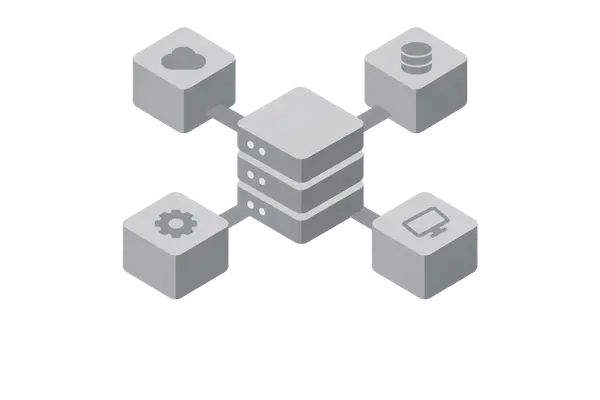
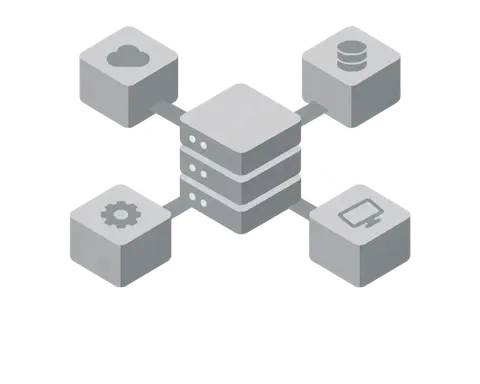
The diagram shows how the four components fit together. Operating systems run on servers and end-user devices. Networks carry requests and responses between those devices and servers.

Loading diagram…

A person uses an end-user device. Its operating system runs applications. The network carries requests and responses. Servers provide shared applications, data, processing, or storage.

Operating systems are software. Servers are computers or virtual machines that provide services. One physical machine can have both a server role and an operating system.

The diagram separates functions that are often confused. The operating system supports the device, the server supplies shared resources, the network carries communication, and the end-user device is where a person uses the information system.

What operating systems, servers, networks and devices do

The table turns the relationships into precise definitions. The role column explains each component's contribution, while the clue words help distinguish similar components.

ComponentWhat it coversScenario clue wordsFit with the other blocks
Operating systemsSoftware that manages a device's hardware resources and provides a platform for applications.boot, kernel, memory, process, file system, device driver, Windows, Linux, macOSRuns on servers and end-user devices and lets their applications use hardware and data.
ServersComputers or virtual machines that provide shared processing, storage, databases, files, or applications to other systems.host, shared, central, database server, application server, file server, request, responseReceive requests through the network and provide shared resources to end-user devices.
Network infrastructureWired and wireless connections and network equipment that connect systems and move data.router, switch, wireless access point, cabling, LAN, WAN, IP address, packetCarries requests and responses between end-user devices and servers.
End-user devicesDevices used directly by people to enter, view, create, and use information and applications.laptop, desktop, tablet, smartphone, workstation, client, keyboard, displayProvide the user interface and use the operating system and network to reach servers.

The function described identifies the component, even when several components use the same physical machine.

Classifying the four architecture components

These questions move from definitions to classification. Correct classification depends on the function described, not merely on the physical object named.

Practice

A staff member's laptop starts, allocates memory to programs, and manages files. Which IT architecture component is being described?

A central system receives requests from many users and returns records from a shared database. Which IT architecture component is being described?

Routers, switches, wireless access points, and cabling carry data between an employee's laptop and a shared application. Which IT architecture component is being described?

A shared database host and the operating system running it are two different architecture components: servers and operating systems.

How the four components support information systems

  • Operating systems manage hardware resources and provide a platform for applications.
  • Servers provide shared processing, storage, data, and applications.
  • Network infrastructure connects systems and carries data.
  • End-user devices let people enter, view, create, and use information.
  • Together, the four components let people use applications and shared information through connected systems.

This structure carries forward into Cloud service and deployment models and Cloud provider roles and governance.

Unlock the full lesson and continue reading

Signup to continue reading this lesson and unlimited access questions, flashcards, AI notes, and more

Scan to download app

Scan to download
UNLOCK FREE ACCESS

Practice Questions: IT architecture building blocks

  1. 1. A company configures its cloud-based analytics environment to add computing capacity automatically when transaction volume increases and remove capacity when volume decreases. The provider charges for the capacity consumed each hour. Which consequence should the CPA expect from this configuration?

    • A. Processing capacity will adjust to demand, while monthly costs may vary with usage.
    • B. Processing capacity will remain fixed, while monthly costs may vary with usage.
    • C. Processing capacity will adjust to demand, while monthly costs will remain fixed.
    • D. Processing capacity will remain fixed, while monthly costs will remain fixed.
    Show answer

    Answer: A. Processing capacity will adjust to demand, while monthly costs may vary with usage.

    Processing capacity will adjust to demand, while monthly costs may vary with usage. - Automatic scaling adds computing capacity when transaction volume rises and removes it when volume falls, making capacity elastic. - Because the provider charges for capacity consumed each hour, the monthly cost may vary with usage. Processing capacity will remain fixed, while monthly costs may vary with usage. - Hourly usage charges can make costs vary from month to month. - Capacity is not fixed because the configuration automatically adds and removes it as transaction volume changes. Processing capacity will adjust to demand, while monthly costs will remain fixed. - Automatic scaling does adjust processing capacity to demand. - Monthly costs are not fixed because the provider charges for the capacity consumed each hour. Processing capacity will remain fixed, while monthly costs will remain fixed. - Capacity is not fixed because it changes automatically with transaction volume. - Costs are not fixed because hourly charges depend on the capacity consumed.

  2. 2. A company operates its general ledger in a cloud environment dedicated to the company. During quarter-end, the company automatically uses computing capacity from a public cloud provider for consolidation workloads, and the two environments exchange data through an integrated orchestration layer. Which cloud deployment model is being used?

    • A. Hybrid cloud
    • B. Community cloud
    • C. Private cloud
    • D. Public cloud
    Show answer

    Answer: A. Hybrid cloud

    Hybrid cloud - The dedicated general-ledger environment is a private cloud, while quarter-end consolidation uses capacity from a public cloud provider. - The integrated orchestration layer connects the two environments, making the deployment a hybrid cloud. Community cloud - A community cloud is shared by organizations with common requirements; the question describes one company’s dedicated environment instead. - The added quarter-end capacity comes from a public cloud provider, not a cloud shared by such a community. Private cloud - The company’s dedicated general-ledger environment is a private cloud component. - The overall deployment is not solely private because consolidation workloads also use integrated public-cloud capacity. Public cloud - Quarter-end consolidation uses public-cloud capacity, but that is only one component of the deployment. - The general ledger remains in a dedicated environment connected to the public cloud, so the overall model is hybrid.

  3. 3. A company develops a custom financial-close application on a platform-as-a-service cloud environment. The provider manages the physical infrastructure, operating system, and application runtime. Which responsibility remains primarily with the company?

    • A. Testing application-code changes and configuring user access
    • B. Patching the host operating system and database engine
    • C. Replacing failed storage devices and network equipment
    • D. Securing the physical data center and hypervisor layer
    Show answer

    Answer: A. Testing application-code changes and configuring user access

    Testing application-code changes and configuring user access - In this platform-as-a-service arrangement, the provider manages the infrastructure, operating system, and runtime, but the company still controls its custom application code. - The company must therefore test code changes to the financial-close application and configure user access to it. Patching the host operating system and database engine - The stem assigns management of the operating system to the provider, so host patching is not primarily the company’s responsibility. - Patching a provider-managed database engine is likewise a platform task; the company remains responsible for its application and access settings. Replacing failed storage devices and network equipment - Failed storage devices and network equipment are part of the physical infrastructure managed by the provider. - The company uses the cloud platform to run its financial-close application; it does not replace the provider’s hardware. Securing the physical data center and hypervisor layer - Physical data center security belongs with the provider that operates the infrastructure. - The underlying hypervisor layer is also provider-managed, unlike the company’s application code and user access configuration.

  4. 4. A company deploys a custom financial-consolidation application using a platform-as-a-service arrangement. The cloud provider manages the servers, operating system, database engine, and application runtime. The company develops the application code and configures user roles. Which responsibility is retained by the company?

    • A. Securing the application code, user access, and data configuration
    • B. Patching the operating system, database engine, and application runtime
    • C. Maintaining the physical servers, storage devices, and data center facilities
    • D. Replacing failed network equipment and hypervisors in the provider environment
    Show answer

    Answer: A. Securing the application code, user access, and data configuration

    Securing the application code, user access, and data configuration - In this platform-as-a-service arrangement, the company develops the application code and configures user roles, so it retains responsibility for securing code, access, and data configuration. - The provider manages the underlying platform, but that does not transfer responsibility for the company’s application-level controls. Patching the operating system, database engine, and application runtime - The stem expressly assigns the operating system, database engine, and runtime to the provider. - Patching those components follows the provider’s platform-management responsibility, not the company’s responsibility for its code and roles. Maintaining the physical servers, storage devices, and data center facilities - The provider manages the servers supporting the consolidation application. - Physical storage and facilities are infrastructure responsibilities, unlike the application code and user-role configuration the company controls. Replacing failed network equipment and hypervisors in the provider environment - Network equipment and hypervisors in the provider environment are part of the infrastructure supporting the service. - Replacing failed provider infrastructure is different from securing the company-developed application and its user access.

  5. 5. A company is selecting a SaaS provider for its accounting system. Management is concerned that a future acquisition of the provider could increase fees or discontinue essential services. Which contract provision would most directly reduce the company's dependence on the provider?

    • A. Require data export in a documented nonproprietary format and provide defined exit assistance
    • B. Require service credits when monthly application availability falls below the contracted percentage
    • C. Require the provider to create and manage the encryption keys used for stored accounting data
    • D. Require the provider to automatically increase computing capacity when transaction volume rises
    Show answer

    Answer: A. Require data export in a documented nonproprietary format and provide defined exit assistance

    Require data export in a documented nonproprietary format and provide defined exit assistance - A documented nonproprietary format lets the company move its accounting data to another system if an acquisition leads to higher fees or discontinued services. - Defined exit assistance helps the company complete that transition rather than depending on the provider to cooperate later. Require service credits when monthly application availability falls below the contracted percentage - Service credits compensate the company for availability falling below the contracted percentage. - They do not help the company move its accounting data or operations to another provider. Require the provider to create and manage the encryption keys used for stored accounting data - Provider-managed keys address encryption administration for stored accounting data. - They do not provide a way to migrate the system and may increase dependence on the provider. Require the provider to automatically increase computing capacity when transaction volume rises - Automatic capacity increases help the application handle rising transaction volume. - Scalability does not give the company a way to leave if the provider raises fees or discontinues essential services.

  6. 6. A company is selecting a cloud-based budgeting platform. Management is concerned that changing providers later could be costly because the provider may store budgets, assumptions, and audit logs in a proprietary format. Which contract provision would most directly mitigate this vendor-dependence risk?

    • A. Require periodic exports of company data and audit logs in a documented, nonproprietary format.
    • B. Require the provider to encrypt company data while stored and while transmitted.
    • C. Require the provider to maintain processing capacity above the company's forecasted peak usage.
    • D. Require the provider to notify the company before changing privileged-access administrators.
    Show answer

    Answer: A. Require periodic exports of company data and audit logs in a documented, nonproprietary format.

    Require periodic exports of company data and audit logs in a documented, nonproprietary format. - Documented, nonproprietary exports make the budgets, assumptions, and audit logs usable when the company moves to another provider. - Requiring periodic exports directly reduces the risk that the provider’s proprietary format will make a later switch costly. Require the provider to encrypt company data while stored and while transmitted. - Encryption protects data confidentiality in storage and transit, but it does not make the data portable. - The company could still face costly migration if its budgets and audit logs remain in a proprietary format. Require the provider to maintain processing capacity above the company's forecasted peak usage. - Processing capacity addresses whether the platform can handle forecasted peak usage. - Extra capacity does not help the company transfer budgets, assumptions, or audit logs to another provider. Require the provider to notify the company before changing privileged-access administrators. - Administrator-change notice supports oversight of privileged access. - It does not address the proprietary data format that could make changing providers costly.

  7. 7. A company develops a custom expense-reporting application using a public-cloud platform-as-a-service arrangement. The provider manages the physical infrastructure, operating system, and application runtime, while the company develops the application and maintains employee data. Which allocation of responsibilities is most consistent with this arrangement?

    • A. The provider administers application access roles, while the company patches the operating system.
    • B. The provider patches the runtime environment, while the company administers application access roles.
    • C. The provider validates accounting configurations, while the company patches the virtualization layer.
    • D. The provider provisions application users, while the company maintains the physical network.
    Show answer

    Answer: B. The provider patches the runtime environment, while the company administers application access roles.

    The provider patches the runtime environment, while the company administers application access roles. - In this platform-as-a-service arrangement, the provider manages the runtime environment, so it patches that environment. - The company develops the expense-reporting application and maintains employee data, so it administers application access roles. The provider administers application access roles, while the company patches the operating system. - Application access roles belong to the company's responsibilities for its expense-reporting application, not the provider's. - The provider manages the operating system, so assigning its patches to the company reverses the stated allocation. The provider validates accounting configurations, while the company patches the virtualization layer. - Validating the custom application's accounting configurations is the company's responsibility, not the provider's. - The virtualization layer supports the provider-managed infrastructure, so its patching is not assigned to the company. The provider provisions application users, while the company maintains the physical network. - Provisioning users of the company's application is part of administering application access, not a provider responsibility here. - The provider manages the physical infrastructure, including the physical network, rather than leaving its maintenance to the company.

  8. 8. Several independent CPA firms plan to use a cloud environment operated by a third party. Access will be limited to participating firms, all of which must follow common security, confidentiality, and regulatory requirements established by the consortium. Which cloud deployment model best fits these requirements?

    • A. Public cloud
    • B. Community cloud
    • C. Hybrid cloud
    • D. Private cloud
    Show answer

    Answer: B. Community cloud

    Community cloud - A community cloud serves multiple organizations with shared requirements, matching the independent CPA firms’ common security, confidentiality, and regulatory rules. - A third party may operate it; access restricted to participating firms is what distinguishes this arrangement. Hybrid cloud - A hybrid cloud combines distinct cloud environments, such as a private cloud and a public cloud. - The firms plan to use one shared environment, not connected environments of different deployment types. Private cloud - A private cloud is dedicated to one organization, even if a third party operates it. - The participating CPA firms are independent organizations sharing access, rather than one firm using its own dedicated cloud. Public cloud - A public cloud is available for use by the general public, including unrelated customers. - This environment limits access to firms in a defined consortium with shared requirements, so it is not public.

  9. 9. A company develops a custom budgeting application using a platform-as-a-service cloud arrangement. The provider manages the physical infrastructure, operating system, middleware, and application runtime. Which allocation of responsibilities is consistent with this arrangement?

    • A. The provider patches the runtime, while the company tests application compatibility and controls its data and user access.
    • B. The company patches the runtime, while the provider tests custom application code and approves the company's users.
    • C. The provider maintains custom application code and user roles, while the company secures the provider's data centers.
    • D. The company patches physical hosts, while the provider determines the company's data-retention and authorization rules.
    Show answer

    Answer: A. The provider patches the runtime, while the company tests application compatibility and controls its data and user access.

    The provider patches the runtime, while the company tests application compatibility and controls its data and user access. - In this platform-as-a-service arrangement, the provider manages and patches the runtime along with the infrastructure, operating system, and middleware. - The company develops the custom budgeting application, so it tests compatibility after runtime changes and controls its data and user access. The company patches the runtime, while the provider tests custom application code and approves the company's users. - Runtime patching belongs to the provider because the stated arrangement assigns it the application runtime. - Testing the company’s custom code and approving its users remain the company’s responsibilities, not the provider’s. The provider maintains custom application code and user roles, while the company secures the provider's data centers. - The company, not the provider, maintains its custom application code and user roles. - Securing the provider’s physical data centers falls within the infrastructure the provider manages. The company patches physical hosts, while the provider determines the company's data-retention and authorization rules. - Physical host patching belongs to the provider as manager of the physical infrastructure. - The company determines its data-retention and authorization rules for the budgeting application.

Flashcards: IT architecture building blocks

  1. 1. What function does a Wide Area Network (WAN) serve?

    Show answer

    A WAN facilitates connections between computers across long distances.

  2. 2. What is a defining feature of a computer virus?

    Show answer

    A virus infiltrates a computer system and requires a host application to operate.

  3. 3. What is the internal memory used for immediate processing in computers?

    Show answer

    Random Access Memory (RAM)

  4. 4. What is the purpose of automated equipment controls?

    Show answer

    They are used to identify and prevent issues with hardware.

  5. 5. What role does a firewall play in network security?

    Show answer

    Firewalls are designed to block unauthorized network access.

  6. 6. What are the main characteristics of a Value-Added Network (VAN)?

    Show answer

    A VAN is a privately managed network that: - Acts as an intermediary between two businesses - Facilitates EDI transactions - Supports various protocols - Incurs high expenses

  7. 7. What role does a LAN (local area network) serve?

    Show answer

    A LAN connects computers within a limited area.

  8. 8. What distinguishes a computer worm from other malware?

    Show answer

    A worm spreads across multiple systems independently of a host application.

  9. 9. Identify tasks a systems programmer should not perform.

    Show answer

    To enhance internal controls, a systems programmer should not: - Engage in application programming - Operate the system

Everything you need for CPA prep

Get full Oncourse access with lessons, practice questions, flashcards and AI study tools.

GET STARTED FOR FREE
75% OFFLimited time offer
GET 75% OFF