
Planning a SOC engagement
On this page
What the SOC report covers
A SOC engagement produces an independent practitioner's report about a service organization's system and controls. The service organization prepares the system description and its assertion about that description.
The practitioner decides whether the criteria are suitable, whether the scope is complete, and whether independence is present. The practitioner also decides how materiality and risk affect the work and what evidence is needed.
A SOC 1 engagement focuses on controls relevant to user entities' internal control over financial reporting. A SOC 2 engagement uses the 2017 Trust Services Criteria for security, availability, processing integrity, confidentiality, and privacy. The report covers only the stated system, subject matter, criteria, and period. It does not cover every activity of the service organization. Users decide whether the report meets their needs.
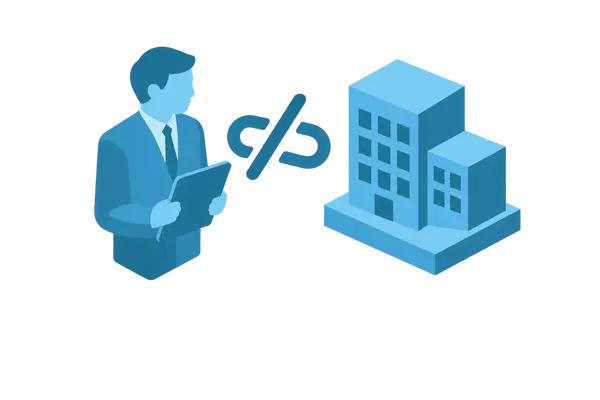
Without these rules, a report could cover the wrong system, omit an outsourced provider, rely on a conflicted auditor, or give too much confidence to an untested control result. LedgerLink and CloudVault share a parent. North CPA has no stated interest in either company. Does that ownership fact alone decide North CPA's independence?
Set the system reporting boundary
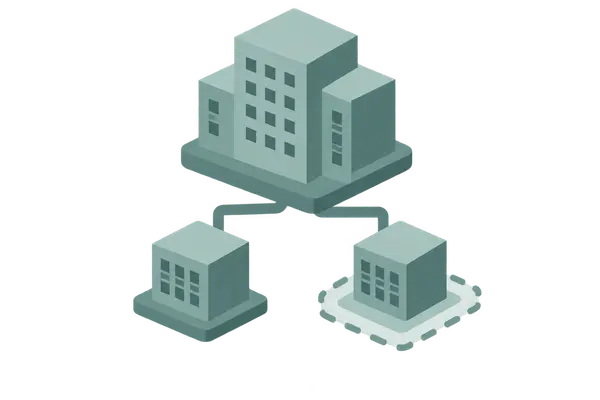
Read the tree from the system definition downward. First ask whether another organization performs services that are part of the service organization's system. Then determine whether that organization's controls are included or excluded. Set the reporting boundary before evaluating independence, materiality, and risk.
Loading diagram…
The outsourced-service question comes before independence because inclusion or exclusion changes which organizations are in scope. Materiality and risk follow because the subject matter, controls, and evidence are then known.
Independence for organizations in scope
Independence follows the organizations in scope
AT-C 105 requires the practitioner to be independent under the AICPA Code of Professional Conduct. The service auditor must be independent of the service organization.
When the inclusive method includes controls at a subservice organization, the service auditor must also be independent of that included subservice organization. The service organization and subservice organization do not have to be independent of each other.
Common ownership alone does not determine the service auditor's independence. A direct financial interest impairs independence regardless of amount. A material indirect financial interest also impairs independence. An immaterial indirect interest does not by itself impair independence.
Customary line: direct interest means any amount matters; indirect interest depends on materiality. A failed relationship must be cured under the applicable ethics rules, or the engagement must not proceed. The full rule appears in Independence in SOC engagements.
Outsourced work changes the report boundary
Another organization qualifies as a subservice organization only when it provides services that are part of the service organization's system and relevant to the engagement's subject matter. A vendor outside that system is not automatically a subservice organization.
Under the inclusive method, the description includes the relevant subservice functions and controls. The engagement obtains evidence about those controls, and the report covers them.
Under the carve-out method, the description excludes the subservice organization's controls. The service auditor does not test those controls under the engagement. The report identifies the nature and significance of the outsourced services.
The service organization should identify complementary subservice organization controls. These are controls expected at the subservice organization that are needed with the service organization's controls.
Customary line: included means evidence and coverage; carved out means identify, do not test, and explain the boundary. The full rule appears in Subservice organizations and carve-outs.
Materiality and risk follow the subject matter
AT-C 105 requires the practitioner to apply materiality when planning and performing the engagement. Materiality is the size or nature of an omission or misstatement that could influence intended users' decisions.
The assessment considers matters individually and in aggregate. AICPA standards do not prescribe a dollar or percentage cutoff for a SOC engagement.
The practitioner sets overall materiality for the engagement. The practitioner may set lower objective materiality for a particular control objective. Qualitative significance can matter even without a dollar amount.
For an illustration, overall materiality is $100,000. Objective materiality for one control objective is $60,000. A projected effect from one payroll-control deviation is $80,000.
The $80,000 item exceeds objective materiality. It must be evaluated for its effect on the control objective and report. It does not automatically require an adverse or modified conclusion.
Risk assessment considers whether:
- The description is not fairly presented.
- Controls are not suitably designed.
- Controls did not operate effectively against the criteria.
Risk assessment also considers complexity, volume, changes, reliance on a subservice organization, and the quality of available evidence. High risk can require more or better evidence without automatically changing materiality.
Customary line: materiality sets the significance threshold; risk sets the nature, timing, and extent of work. The full rule appears in Materiality and risk assessment.
These rules work in order. Scope identifies the organizations and controls. Independence protects the practitioner's credibility. Materiality and risk determine how much evidence is needed.
Independence for organizations in scope


Which facts change the rules
Look for the fact that changes the branch. Do not treat every vendor, relationship, or exception the same way. A direct interest and a material indirect interest are different independence facts.
A provider's role in the system determines whether it is a subservice organization. The description's treatment of its controls then determines inclusive or carve-out scope. Materiality depends on intended users, subject matter, and control-objective significance. Risk depends on the likelihood and consequences of a problem and the evidence available.
| Fact in the situation | Sends you to | What changes |
|---|---|---|
| The service auditor has a direct financial interest in an organization in scope. | Independence | Independence is impaired regardless of amount; cure the interest or do not proceed. |
| The service auditor has only an indirect financial interest. | Independence | A material indirect interest impairs independence; an immaterial indirect interest does not by itself. |
| Another organization provides services that are part of the relevant system. | Subservice scope | The provider qualifies as a subservice organization, so inclusive or carve-out treatment must be selected. |
| The subservice organization's controls are included in the system description. | Inclusive method | Obtain evidence about those controls, and extend independence analysis to the included subservice organization. |
| The subservice organization's controls are excluded from the system description. | Carve-out method | Do not test those controls, but identify outsourced services and complementary subservice organization controls. |
| The subject matter or a control objective could influence intended users. | Materiality | Set overall and objective materiality using judgment, including qualitative matters. |
| The outsourced provider handles 70% of transaction processing or evidence is weak. | Risk assessment | Treat the service as a significant risk factor and obtain more or better evidence. |
The branch depends on the qualifier in the fact, not merely on the presence of an outside provider or a financial relationship.
CloudVault's role changes the scope
Use one client throughout. LedgerLink processes payroll for retail users. Its monthly payroll volume is $40,000,000.
CloudVault stores and backs up LedgerLink's payroll data. It also handles 70% of transaction processing.
At the clean starting point, CloudVault's controls are carved out. North CPA has no direct or material indirect financial interest in LedgerLink or CloudVault.
Overall materiality is $100,000. Objective materiality for payroll authorization is $60,000.
Your turn: CloudVault supplies only generic office internet rather than storing payroll data. Does the subservice branch still apply?
Change one thing: restore the payroll role and make CloudVault's controls included in the report. Ask what changes in scope and independence.
The 1% direct interest must be sold or otherwise cured before later materiality and risk decisions can be completed.
Treat each row as the next fact change from the clean LedgerLink case. The verdict names the governing rule and the chapter that provides it.
| Changed fact | Verdict | Chapter says so |
|---|---|---|
| Starting facts: CloudVault stores and backs up payroll data, handles 70% of processing, and its controls are carved out. | CloudVault is a subservice organization. Carve-out excludes its controls from testing but identifies services and complementary controls. Its processing share raises risk. | Subservice organizations and carve-outs; Independence in SOC engagements; Materiality and risk assessment |
| CloudVault supplies only generic office internet rather than storing payroll data. | CloudVault is outside the relevant system. It is not a subservice organization, so the subservice branch does not apply. | Subservice organizations and carve-outs |
| Change only the report method: CloudVault's controls are now included. | Inclusive scope requires evidence on CloudVault's controls. Independence must cover CloudVault and LedgerLink. North CPA passes the stated interest test. | Subservice organizations and carve-outs; Independence in SOC engagements |
| Change only North CPA's relationship: the engagement partner buys a 1% direct financial interest in CloudVault. | The 1% direct interest impairs independence regardless of amount. Cure it or do not issue the report. | Independence in SOC engagements |
| After the interest is cured, one payroll authorization deviation has a projected effect of $80,000. | The $80,000 deviation exceeds $60,000 objective materiality. Evaluate its effects; no automatic adverse or modified conclusion follows. | Materiality and risk assessment |
| CloudVault cannot provide controls evidence for the period. | Risk rises because significant processing lacks evidence. Seek alternative evidence or revise scope and reporting. | Materiality and risk assessment |
Each change activates a different planning judgment, even though LedgerLink and CloudVault remain the same parties.
Financial interests, scope and risk
Use four multiple-choice items. Each situation changes one decisive fact. The correct response comes from the fact controlling the branch.
Practice
CloudVault's controls are included in LedgerLink's SOC 1 system description. LedgerLink and CloudVault are owned by the same parent. North CPA has no direct or material indirect financial interest in either organization. What is the correct independence conclusion?
CloudVault performs part of LedgerLink's system, but LedgerLink chooses the carve-out method. Which treatment is required?
LedgerLink sets overall materiality at $100,000 and objective materiality for payroll authorization at $60,000. A projected effect from one control deviation is $80,000. What is the best response?
CloudVault handles 70% of LedgerLink's transaction processing, and evidence about CloudVault's controls is not available for the period. What is the best planning response?
Identify the fact that changes the branch
- Independence: Identify every organization in scope, then look for a direct financial interest or a material indirect financial interest.
- Subservice scope: Ask whether another organization performs part of the system, then determine whether its controls are included or carved out.
- Materiality and risk: Set overall and objective materiality using the subject matter and intended users, then assess risk and evidence separately.
- First question in every situation: Which fact changed the branch: who performs part of the system, whether controls are included, who holds the financial interest, or how significant and risky the subject matter is?
Unlock the full lesson and continue reading
Signup to continue reading this lesson and unlimited access questions, flashcards, AI notes, and more
Practice Questions: Planning a SOC engagement
1. The internal audit director has direct access to the audit committee and reports administratively to the chief financial officer. The function uses documented sampling, review, and retention policies. Its staff includes certified information systems auditors who tested quarterly privileged-access reviews throughout 2026. The service auditor has not yet inspected the workpapers, reperformed any selections, or evaluated whether the samples address the controls included in the SOC 2 examination. Given these facts, which approach is appropriate if the service auditor plans to use the internal audit function's access-review testing in a SOC 2 Type 2 examination covering the year ended December 31, 2026?
- A. Exclude the work because evidence prepared by an employee of the service organization cannot be used
- B. Accept the work without further evaluation because management remains responsible for the controls
- C. Delegate the access-review conclusion to internal audit and identify internal audit in the opinion paragraph
- D. Evaluate internal audit's competence, objectivity, and systematic approach and test the adequacy of selected work
Show answer
Answer: D. Evaluate internal audit's competence, objectivity, and systematic approach and test the adequacy of selected work
Evaluate internal audit's competence, objectivity, and systematic approach and test the adequacy of selected work - The certified information systems auditors, audit committee access, and documented policies provide a basis to evaluate competence, objectivity, and a systematic approach, despite administrative reporting to the CFO. - Before using the 2026 testing, the service auditor must inspect and test selected work and determine whether its samples address the access-review controls in the SOC 2 Type 2 examination. Exclude the work because evidence prepared by an employee of the service organization cannot be used - Internal audit work is not automatically excluded because its preparers are employees of the service organization. - The service auditor may use relevant quarterly access-review testing after evaluating the function and testing the adequacy of selected work. Accept the work without further evaluation because management remains responsible for the controls - Management’s responsibility for the controls does not replace the service auditor’s responsibility to evaluate evidence used in the examination. - The auditor has not inspected the workpapers, reperformed selections, or determined whether the samples cover the controls being examined. Delegate the access-review conclusion to internal audit and identify internal audit in the opinion paragraph - The service auditor retains responsibility for the SOC 2 Type 2 examination conclusion even when using internal audit’s testing. - Direct audit committee access and staff certifications may support use of the work, but they do not permit delegating the conclusion or substituting an opinion-paragraph reference for evaluation.
2. PayStream Solutions processes payroll transactions for employers, including gross-pay calculations and tax withholdings. User entities and their financial statement auditors use PayStream's controls when assessing internal control over financial reporting. A CPA firm is examining the system for January 1 through December 31, 2025. Before issuing the restricted-use report, the engagement team must evaluate the system description, test results, responsibilities, and resulting opinions.
3. LedgerLink, Inc. engaged a CPA firm to examine controls over its cloud-based journal-entry workflow platform. The engagement team must determine whether the draft system description, test results, and treatment of a backup subservice organization support the proposed report. Management has requested issuance on February 20, 2026.
4. A platform processes consumers' personal information. Management wants a restricted-use report containing detailed control descriptions and tests covering January 1 through December 31, 2025. The engagement is intended to address how the platform collects, uses, retains, discloses, and disposes of personal information. Which engagement best meets this objective?
- A. A SOC 1 Type 2 engagement addressing financial-reporting control objectives
- B. A SOC 2 Type 2 engagement addressing the privacy trust services category
- C. A SOC 2 Type 1 engagement addressing the confidentiality trust services category
- D. A SOC 3 engagement addressing the privacy trust services category
Show answer
Answer: B. A SOC 2 Type 2 engagement addressing the privacy trust services category
A SOC 2 Type 2 engagement addressing the privacy trust services category - The privacy category addresses how the platform collects, uses, retains, discloses, and disposes of consumers’ personal information. - A SOC 2 Type 2 report is restricted-use and includes detailed control descriptions and tests of operating effectiveness for January 1 through December 31, 2025. A SOC 1 Type 2 engagement addressing financial-reporting control objectives - SOC 1 addresses controls relevant to user entities’ internal control over financial reporting, not the platform’s handling of personal information. - Although Type 2 covers operating effectiveness over a period, it does not change the engagement’s financial-reporting focus. A SOC 2 Type 1 engagement addressing the confidentiality trust services category - Confidentiality concerns information designated as confidential, rather than the full personal-information lifecycle addressed by privacy. - Type 1 addresses controls as of a specified date, not tests of operating effectiveness throughout January 1 through December 31, 2025. A SOC 3 engagement addressing the privacy trust services category - The privacy category fits the platform’s objective, but a SOC 3 report is for general use rather than restricted use. - SOC 3 does not provide the detailed control descriptions and tests management requested.
5. A service auditor is planning a SOC 1 Type 2 examination of controls relevant to user entities' internal control over financial reporting for January 1 through December 31, 2025. The service organization's internal audit function tested monthly account-reconciliation controls during the period, and management recommends that the service auditor rely on those tests. The service auditor has not yet assessed the internal auditors' competence, objectivity, or use of a systematic and disciplined approach. Which action should the service auditor take before using the internal audit function's work to modify the nature, timing, or extent of the service auditor's procedures?
- A. Evaluate the internal auditors' competence, objectivity, and disciplined approach and test the quality of selected work
- B. Accept the internal audit results after management confirms that all monthly reconciliations were completed
- C. Exclude the internal audit results because their work cannot be used in a SOC examination
- D. Include the internal audit results as evidence without changing the service auditor's planned procedures
Show answer
Answer: A. Evaluate the internal auditors' competence, objectivity, and disciplined approach and test the quality of selected work
Evaluate the internal auditors' competence, objectivity, and disciplined approach and test the quality of selected work - Before using the internal audit function’s monthly reconciliation tests to change SOC 1 Type 2 procedures, the service auditor must evaluate its competence, objectivity, and systematic and disciplined approach. - The service auditor must also test the quality of selected work to determine whether the internal auditors’ testing supports the planned use. Accept the internal audit results after management confirms that all monthly reconciliations were completed - Management’s confirmation that reconciliations were completed does not establish that the internal auditors tested the controls reliably. - It also does not address the internal auditors’ objectivity or competence, which the service auditor has not yet assessed. Exclude the internal audit results because their work cannot be used in a SOC examination - Internal auditors’ work may be used in a SOC 1 Type 2 examination when the service auditor performs the required evaluation. - The fact that the work concerns monthly reconciliations during 2025 does not, by itself, require its exclusion. Include the internal audit results as evidence without changing the service auditor's planned procedures - Even if planned procedures remain unchanged, the service auditor cannot use the results as evidence without evaluating the function and the quality of its work. - If that evaluation supports using the work, it may appropriately change the nature, timing, or extent of the service auditor’s procedures.
6. In a SOC 2 Type 2 examination covering January 1 through December 31, 2026, management states that encryption settings cannot be changed without an approved ticket. The identified risk is that administrators may disable encryption without authorization during the period. Which procedure would provide the most persuasive evidence about operating effectiveness?
- A. Inspect configuration-change logs for the period and reperform the ticket-matching control for selected encryption changes
- B. Inspect a screenshot of the approved encryption configuration taken on December 31
- C. Inquire of the security manager whether all encryption changes received approval
- D. Confirm with selected customers that transmitted data appeared to be encrypted
Show answer
Answer: A. Inspect configuration-change logs for the period and reperform the ticket-matching control for selected encryption changes
Inspect configuration-change logs for the period and reperform the ticket-matching control for selected encryption changes - Period-wide logs identify encryption changes during the January 1–December 31, 2026, SOC 2 Type 2 examination, including changes that could disable encryption. - Reperformance tests whether selected changes had approved tickets, directly addressing whether the approval control operated during the period. Inspect a screenshot of the approved encryption configuration taken on December 31 - A December 31 screenshot shows the configuration at one point in time, not whether administrators changed it without approval earlier in 2026. - Even an approved year-end setting does not establish that encryption changes were matched to tickets throughout the Type 2 period. Inquire of the security manager whether all encryption changes received approval - Inquiry alone provides the manager’s account but no corroborating evidence of which encryption changes occurred. - It does not test whether administrators’ actual changes during 2026 had approved tickets. Confirm with selected customers that transmitted data appeared to be encrypted - Customer observations concern apparent encryption of transmitted data, not the authorization of administrator configuration changes. - Selected customers could not establish whether an administrator disabled encryption without an approved ticket during the examination period.
7. A practitioner is completing an examination of ApexCloud, Inc.'s system for the period January 1 through December 31, 2025. Management will provide the resulting detailed report to customers, prospective customers with sufficient system knowledge, and their auditors. The practitioner must determine the engagement classification, evaluate assigned responsibilities, assess control-test results and a corrected system-description inconsistency, and determine the effects on the report dated February 15, 2026.
Flashcards: Planning a SOC engagement
1. What is a key objective when planning a SOC engagement?
Show answer
To obtain an understanding of the service organization's system and internal controls. This helps the auditor identify risks, determine the engagement's scope, and develop an effective strategy.
Everything you need for CPA prep
Get full Oncourse access with lessons, practice questions, flashcards and AI study tools.
Scan to download app