Equity swaps, forwards and futures CFA Flashcards - Medical Study Cards
Master Equity swaps, forwards and futures with Oncourse flashcards. These spaced repetition flashcards are designed for medical students preparing for NEET PG, USMLE Step 1, USMLE Step 2, MBBS exams, and other medical licensing examinations.
Equity swaps, forwards and futures Flashcard Deck - 10 Cards
Flashcard 1: Futures vs Forwards
Answer: - Specific date = use forwards
- When cost is concern and perfect hedge not requires = use futures
- Equity risk usually managed through equity index futures
- Forward contracts used to hedge exchange rate risk
Flashcard 2: Macro Hedge
Answer: A macro hedge is a type of cross hedge that addresses portfolio-wide risk factors rather than the risk of individual portfolio assets.
One type of macro hedge uses a derivatives contract based on a fixed basket of currencies to modify currency exposure. May not precisely match exposures but is less costly.
Flashcard 3: Interest Rate Swaps\
*Duration*
Answer: - Fixed rate swaps have higher duration because the change in interest rates will change the present value of the fixed cash flows
- Floating rate duration is close to zero as cash flows vary with interest rate. The convention is to use duration of half the reset period.
Dpay floating = Dfixed - Dfloating
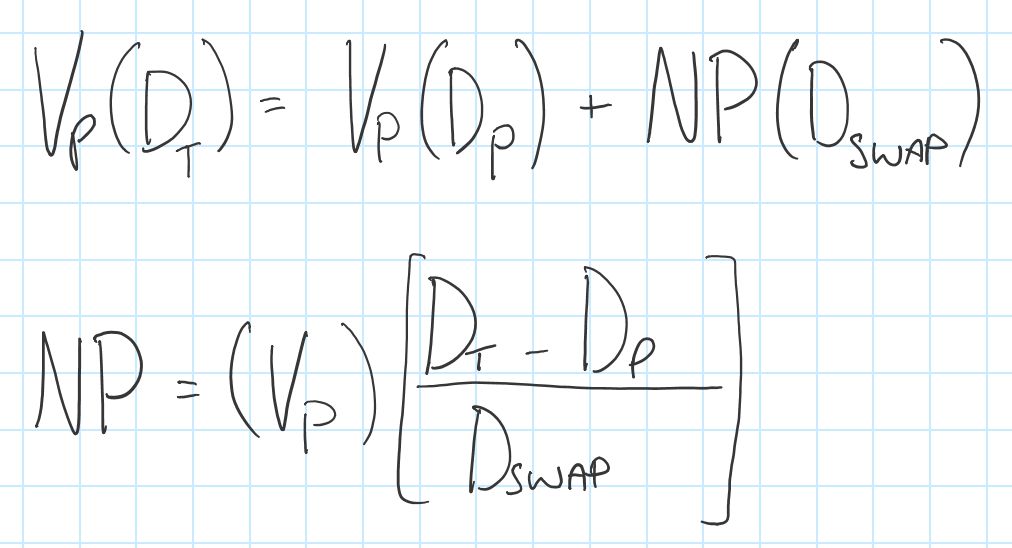
Notional principal should always be positive
Flashcard 4: Prepaid Variable Forward
Answer: A Prepaid Variable Forward combines a margin loan with a hedge on the position through a collar. The margin loan is paid back in the future based on the value at expiration relative to the collar.
eg if the collar is 95 - 105 then if the stock is below 95 you would deliver all and if it is about 105 you would pay 95 plus the amound over 105.
Flashcard 5: Basis
Answer: Basis refers to the difference between the cash price and the futures price.
The risk that the basis will change in an unpredictable way is called basis risk.
Flashcard 6: Interest rate Swaptions
Answer: An Interest Rate Swaption is an option on a swap where one counterparty (buyer) has paid a premium to the other counterparty (seller) for an option to choose whether the swap will actually go into effect at some future date.
Two types of swaptions:
1. Payer Swaption - Pay fixed, receive floating. Similar to a put option on a bond.
2. Receiver Swaption - Receive fixed, pay floating. Similar to a call option on a bond.
The key point is that the terms of the underlying swap and the swap fixed rate (SFR) are negotiasted and set at the purchase of the swaption.
Flashcard 7: Currency Swaps
Answer: A currency swap is different from an interest rate swap in two ways:
1. There are two notional principals and the counterparties exchange the principals
2. Payments not netted as they are in different currencies
Firms engage is currency swaps to gain access to cheaper financing, convert foreign bond payments into local etc
Treat like deposit, earn interest on the principal you exchange
Flashcard 8: Interest Rate Futures vs Interest Rate Calls
Answer: - Interest rate futures are based on underlying interest-bearing instruments. Therefore the prices are negatively correlated with interest rates.
- Interest rate calls are based on underlying interest rates and are positively correlated with interest rates.
Flashcard 9: Risks with Fixed Income and Equity Swaps
Answer: - Tracking Error - Mismatch between performance of portfolio and indices used as proxy on which swap is based
- Cash Flow Problems - May require net payments
Flashcard 10: Swaps
Answer: Contractual agreement to exchange a series of CF over a specific time period. Involve credit risk and have zero MV at initiation.
Types of Swaps:
- Interest Rate Swaps
- Currency Swaps
- Equity Swaps
- Commodity Swaps
Keywords: Equity swaps, forwards and futures flashcards, medical flashcards, NEET PG preparation, USMLE Step 1 flashcards, Anki alternative, spaced repetition medical, Oncourse flashcards

