Selecting strategies to fit stated objectives CFA Flashcards - Medical Study Cards
Master Selecting strategies to fit stated objectives with Oncourse flashcards. These spaced repetition flashcards are designed for medical students preparing for NEET PG, USMLE Step 1, USMLE Step 2, MBBS exams, and other medical licensing examinations.
Selecting strategies to fit stated objectives Flashcard Deck - 10 Cards
Flashcard 1: Collars
Answer: - Combination of a protective put and covered call
- Cost of buying a put is reduced by selling a call option
- Provides downside protection at the expense of upside potential
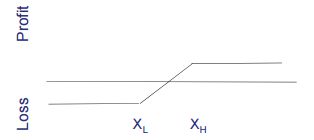
- Similar to Bull spread but hold the underlying
- Zero cost collar is where the call premium equals the put premium
Flashcard 2: Calendar spread
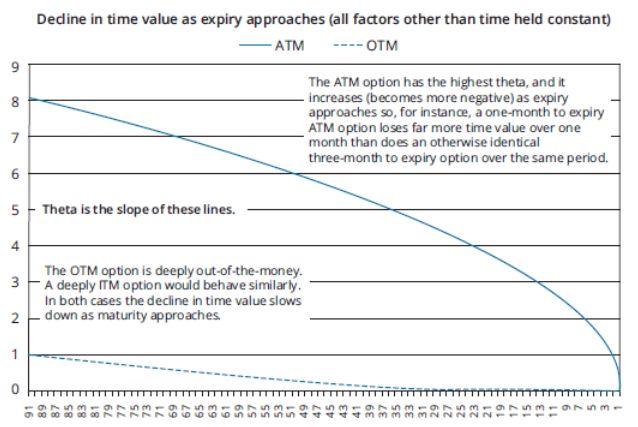
Answer: buying longer-dated options and selling shorter-dated options with the same strike and underlying.
Theta measures how quickly an option loses value as time passes.
In principle the premium on the shorter-dated should fall faster than the premium on the longer-dated.
Thus more value is gained on the short position than is lost on the long position, and a net profit is realized.
Flashcard 3: Volatility Trading\
*Tactical Currency Management*
Answer: Volatility trading allows managers to profit from predicting changes in currency volatility.
- Delta measures the change in the value of an option's price for a change in value of the underlying
- Vega measures change in value of the option for changes in volatility of the underlying
By Delta Hedging the manager will not gain or lose from small changes of the price of the underlying but will still be exposed to volatility.
A manager expecting volatility to increase should enter a long straddle by purchasing an at-the-money call and put.
A manager expecting volatility to decrease should enter a short straddle by selling both of these options.
A strangle if similar but uses out of-the-money options with the same delta. Requires large changes in value to create value.
Delta positions can also be tilted based on the manager's view.
Flashcard 4: Delta Hedging
Answer: Delta Hedging is combining an option position with a position in the underlying asset to form a portfolio whose value does not change in reaction to changes in the underlying over short periods of time. Buy (sell) delta number of shares for each short (long) position.
- Delta is an approximation for small changes only
- Delta changes with time and with the price of the underlying
- Rounding causes imprecission
Deltacall = (Change in Call/Change in Spot)
Delta Hedges need to be constantly rebalanced
Flashcard 5: Vega and Volatility Risk
Answer: Vega = (Change in Option/Change in Vol of Underlying)
- At-the-money option has greatest Vega
- Volatility is unobservable so it is difficult to estimate Vega
- Delta is required to manage Vega risk jointly with delta & gamma
Flashcard 6: Gamma and the Risk of Delta
Answer: Gamme = (Change in Delta/Change in Spot)
- Larger the gamma, greater the risk
- Gamma is largest for at-the-money and/or near expiration
- Gamma hedge = position in underlying & position in two options
Flashcard 7: Interest Rate Cap
Answer: - Interest rate cap is a combination of interest rate calls
- Each option in a cap is a caplet
- Each caplet has same X but its own expiration date
- Cap seller makes payment if IR \< strike rate
- Payoff is determined on its expiration date but made on the next payment date
Flashcard 8: Interest Rate Collar
Answer: - A combination of a cap and a floor where the agent is long in one position and short in the other
- Attractive to a bank that has among its liabilities large deposits with floating interest rates
Flashcard 9: Gamma
Answer: Gamma = (change in Delta)/(change in Underlying)
- Measures the sensitivity of delta to a change in the underlying
- Highest when option is at the money/or near expiration
- When gammas are large, some delta hedgers choose to also gamma hedge
Flashcard 10: Lending and Interest Rate Put Options
Answer: A put establishes a minimum lending rate
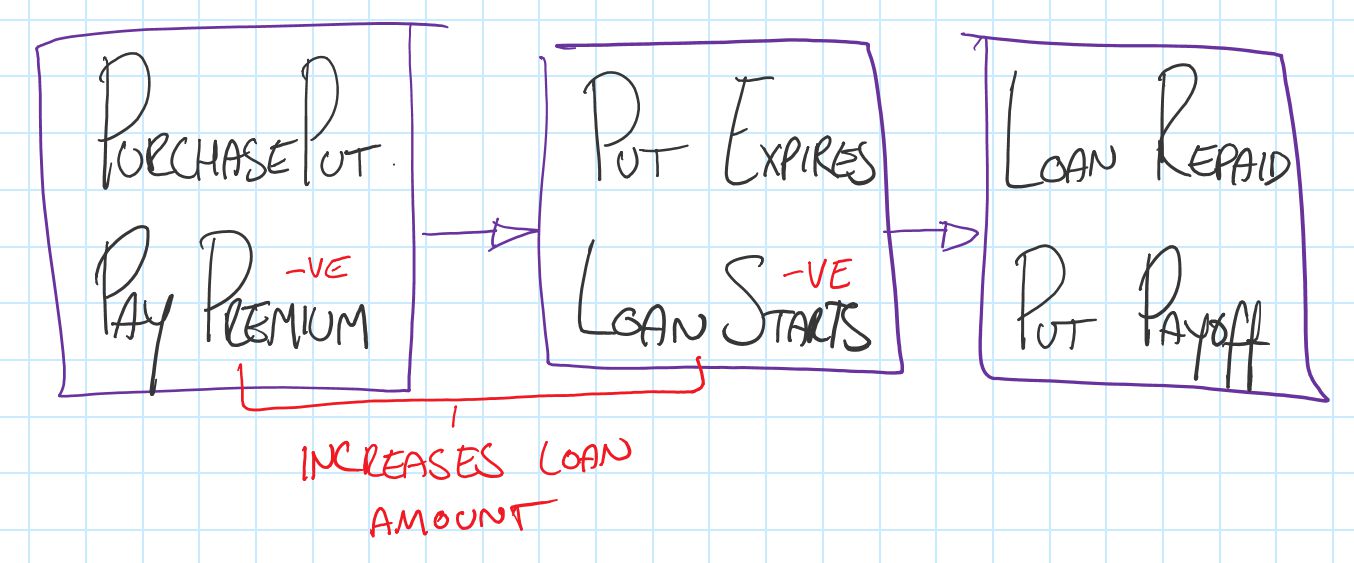
Payoff = (NP)[max(0, Strike - LIBOR)](D/360)
FV(premium) = premium[1 + (current LIBOR + spread)(maturity/360)
**Net Amount = Loan + FV(premium)**
Effective Interest Earned = Lending Income + Put Payoff
EAR = [(NP + Effective Dollar Interest Earned) / Net Amount]^(365/D) - 1
Keywords: Selecting strategies to fit stated objectives flashcards, medical flashcards, NEET PG preparation, USMLE Step 1 flashcards, Anki alternative, spaced repetition medical, Oncourse flashcards

