Options Strategies CFA Flashcards - Medical Study Cards
Master Options Strategies with Oncourse flashcards. These spaced repetition flashcards are designed for medical students preparing for NEET PG, USMLE Step 1, USMLE Step 2, MBBS exams, and other medical licensing examinations.
Options Strategies Flashcard Deck - 10 Cards
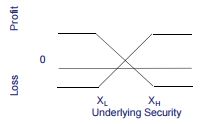
Flashcard 21: Box Spread
Answer: - Combination of a bull call spread and a bear put spread on the same asset
- Payoff is the same regardless of the value of the underlying
- If the option is priced correctly the return should be the risk-free rate
Flashcard 22: Covered Call
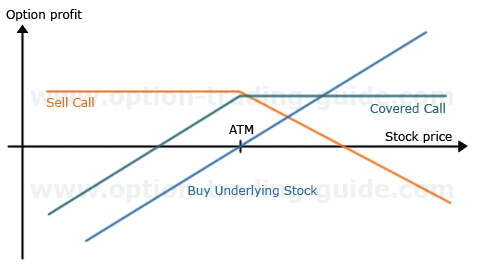
Answer: - Long Stock + Short Call
- Appropriate when expected little change in price in near term
- Generates income
Flashcard 23: Straddle
Answer: - Purchase of a Put and Call with the same X and maturity
- Expect an increase in volatility
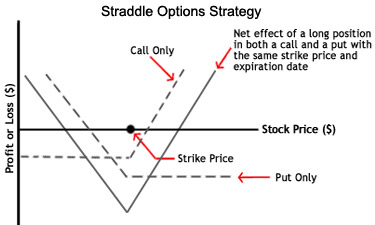
- Can use a short straddle when neutral view about volatility
Flashcard 24: Concentrated Equity Positions\
*Yield Enhancement*
Answer: Investors can enhance the yield of a concentrated position while decreasing its volatility by writing covered calls against some or all of the shares. Effectively allows the investor to establish a liquidation value.
One of the most significant benefits is that it can psychologically prepare the owner to dispose of those shares.
Flashcard 25: Strategies to Modify Risk and Lower Hedging Costs
Answer: - Over or under hedge based on manager view
- Buy at-the-money put options - delta of -0.5, eliminates downside and retains upside. Highest initial cost.
- Buy out-of-the-money put options - delta smaller than 0.5, less cost but does not eliminate all of the downside.
- Risk reversal or coller - removes some downside and upside but lowers cost through premium income (selling call).
- Put spread - But OTM puts and sell puts further out of the money to reduce cost
- Seagull spread - put spread combined with selling a call
Can also use exotic options to reduce cost such as knock-in, knock-out and binary or digital options (pay a fixed amount).
Flashcard 26: Concentrated Equity Positions\
*Hedging Strategies*
Answer: Hedging is a useful strategy when the holder of a concentrated position would like to protect against downside risk but still benefit from any potential upsides. Two major hedging strategies are:
- Purchase of Puts - Locks in a floor price, retain unlimited upside potential and defers capital gains. Can be expensive but cost can be reduced by purchasing out of the money, shorter maturity, selling puts with lower strike (put spread) etc.
- Cashless (Zero-Premium) Collars - Simultenously buy Puts and sell Calls. Premiums offset each other but you give away some upside potential.
A collar can be combined with a margin loan to monetize the position. An instrument that combines the two is known as a Prepaid Variable Forward.
Flashcard 27: Volatility Trading\
*Tactical Currency Management*
Answer: Volatility trading allows managers to profit from predicting changes in currency volatility.
- Delta measures the change in the value of an option's price for a change in value of the underlying
- Vega measures change in value of the option for changes in volatility of the underlying
By Delta Hedging the manager will not gain or lose from small changes of the price of the underlying but will still be exposed to volatility.
A manager expecting volatility to increase should enter a long straddle by purchasing an at-the-money call and put.
A manager expecting volatility to decrease should enter a short straddle by selling both of these options.
A strangle if similar but uses out of-the-money options with the same delta. Requires large changes in value to create value.
Delta positions can also be tilted based on the manager's view.
Flashcard 28: Collar
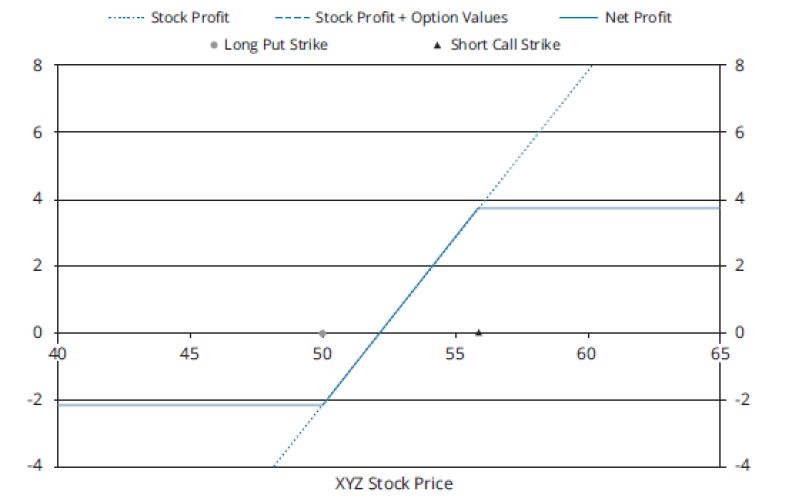
Answer: An investor who is long the underlying\
buy a put (most likely OTM) to hedge the stock’s downside\
selling a call (also most likely OTM) to sell off the upside and subsidize the cost of the put.
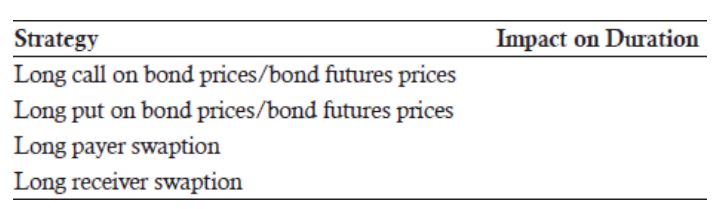
Flashcard 29: Options and their impact on portfolio duration\
Answer: 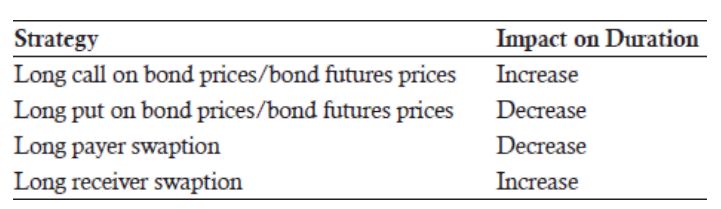
- Adding call options on either a bond price or a bond futures contract will increase the duration of a fixed-income portfolio because the calls will increase in value as yields fall and bond prices rise.
- Adding put options on either a bond price or a bond futures contract will decrease the duration of a fixed-income portfolio because the puts will increase in value as yields rise and bond prices fall.
- A payer swaption gives the holder the right to enter a pay-fixed swap. This becomes valuable as rates rise; hence, a payer swaption decreases the duration of the portfolio.
- A receiver swaption gives the holder the right to enter a receive-fixed swap. This becomes valuable as rates fall; hence, a receiver swaption increases the duration of the portfolio.
Flashcard 30: Realized variance
Answer: 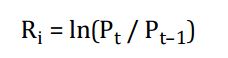
Keywords: Options Strategies flashcards, medical flashcards, NEET PG preparation, USMLE Step 1 flashcards, Anki alternative, spaced repetition medical, Oncourse flashcards

