Short-term tactical shifts CFA Flashcards - Medical Study Cards
Master Short-term tactical shifts with Oncourse flashcards. These spaced repetition flashcards are designed for medical students preparing for NEET PG, USMLE Step 1, USMLE Step 2, MBBS exams, and other medical licensing examinations.
Short-term tactical shifts Flashcard Deck - 7 Cards
Flashcard 1: Benefits and Costs of Rebalancing
Answer: Benefits
- Decrease in PV of expected utility loss
- Controls the level of drift in overall portfolio risk
- Maintains desired systematic risk exposure
Costs
- Transaction costs
- Tax costs
Flashcard 2: Percentage range rebalancing (5)
1. transaction cost
2. correlations between classes
3. risk tolerance
4. markets type
5. asset class volatility (excluding the one considered)
6. asset class volatility (the one considered)
Answer: is when a band is violated. Wider bands for:
1. higher transaction cost
2. higher correlations between classes
3. higher risk tolerance
4. momentum markets
5. less volatile asset classes (excluding the one considered) because higher volatility increases the likelihood that the actual allocation will diverge over time from the target allocation. if mention about concern over transaction cost, higher volaitlity should have a wider corridor to avoid costs.
Flashcard 3: Risks in International Assets
Answer: The additional risks to consider are:
- Currency Risk - Exposes the investor to changes in value of foreign asset and changes in value of the foreign currency.
- Political Risk - Exists when a country has irresponsible fiscal and/or monetary policy, lacks rules to support financial markets
- Home Country Bias - Investors tend to overweight investments in their own country, creating suboptimal portfolios.
Additional costs include higher transaction costs, tax inefficiencies.
Flashcard 4: Percentage-of-Portfolio Rebalancing\
*Optimal Corridor Width*
Answer: Managers should consider 5 factors:
1. Transaction Costs - Higher costs = wider corridor
2. Risk Tollerance - Higher tollerance = wider corridor
3. Correlation of returns with other asset classes - Higher = wider corridor
4. Asset class volatility - Higher = narrower corridor
5. Volatility with returns of other assets in portfolio - Higher = narrower corridor
Flashcard 5: MVO & Risk-Free Asset
Answer: When a risk-free asset exists it leads to the concept of CALs and CMLs. A CAL is a line between the risk-free and a portfolio of risky assets while the CML is a line between the risk-free and the market portfolio.
Practical problems include:
- Often no risk-free asset that meets the requirement of zero standard deviation and zero correlation.
- Borrowing creates obligations that may be unacceptable.
If included it is typically treated as a risky asset.
Flashcard 6: Emerging Markets
Answer: The special considerations of emerging market investing include:
- Liquidity and free-float can be limited
- Non-normal return distributions inconsistent with mean-variance assumptions. Tend to be leptokurtic (fat tails)
- Can exhibit contagion
- Restrictions of ability to repatriate
- Inefficient markets
Flashcard 7: Corner Portfolios
Answer: When short selling is constrained portfolio weights must sum to 1, in this case the EF can closely be approximated by a linear combination of corner portfolios.
The Global Minimum Variance Portfolio is a Corner Portfolio. All other Corner Portfolios are set when the weight of an asset class changes from zero to positive or positive to zero.
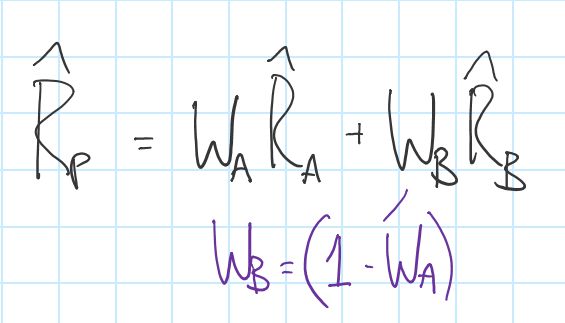
Will slightly overstate the risk. Should always use the closest pair of brackets.
Keywords: Short-term tactical shifts flashcards, medical flashcards, NEET PG preparation, USMLE Step 1 flashcards, Anki alternative, spaced repetition medical, Oncourse flashcards

