USMLE Step 3 Practice Test Strategy: Timing, Review and Weak Areas
Master USMLE Step 3 practice test strategy with expert timing techniques, systematic review methods, and weak area identification for clinical decision-making success.
USMLE Step 3 Practice Test Strategy: Timing, Review and Weak Areas
You are staring at your first Step 3 practice test results. The score looks decent, but you know there's more to learn from this test than just the number. Step 3 isnt just about knowing medicine — its about managing patients under time pressure while making the right clinical decisions across primary care, acute care, and everything in between.
Your practice test just gave you a roadmap to passing. The key is converting every wrong answer, every uncertain guess, and every time crunch into targeted improvements. Here's exactly how to extract maximum value from each practice session and turn your weak spots into strengths.
Setting Realistic Timed Practice Conditions
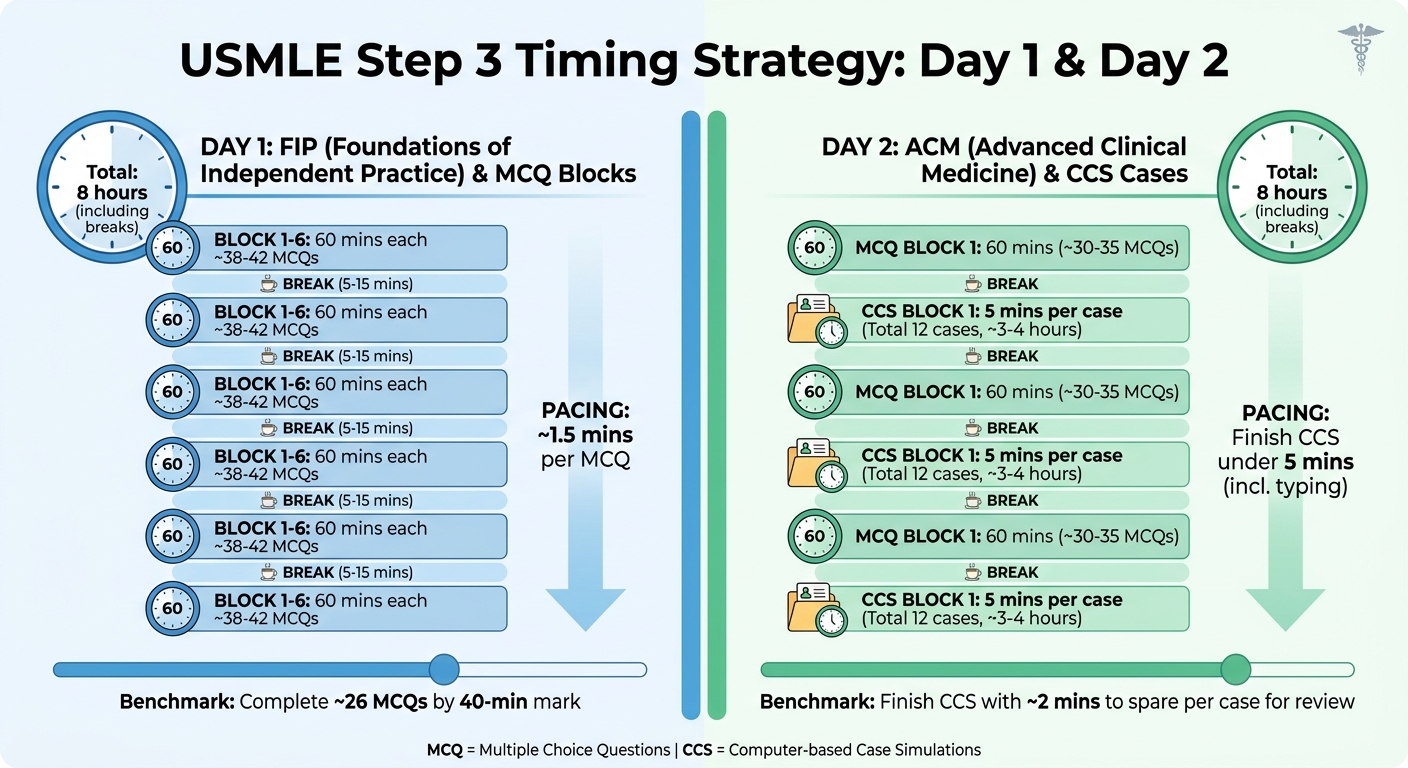
Step 3 demands different timing discipline than Step 1 or Step 2 CK. Day 1 gives you 60 minutes for each block of 38-42 questions — thats roughly 90 seconds per question. Day 2 alternates between 30-question MCQ blocks (45 minutes each) and CCS cases, creating a rhythm that challenges your mental stamina differently.
Day 1 Timing Strategy
Target reaching question 20 with 30 minutes remaining in each 60-minute block. This benchmark ensures you see every question with time for review. If you consistently fall behind this pace during practice, you are spending too long on individual questions and need to develop faster pattern recognition.
Practice the 90-second rule: spend no more than 90 seconds on your first pass through any question. If you cant identify the answer within this window, select your best guess and flag it for review. This prevents you from getting trapped on difficult questions while easier ones go unanswered.
Day 2 Rhythm Management
Day 2's alternating format between MCQs and CCS cases requires different mental switching. Practice this exact pattern during your study blocks. Complete a 45-minute MCQ block, then immediately move to a CCS case. The transition time matters — you need to shift from rapid-fire decision making to methodical patient management.
CCS cases get 20-25 minutes of real time each, but the simulated patient time can span days or weeks. Practice advancing the clock efficiently. Many residents waste precious minutes micro-managing unnecessary details instead of focusing on key decision points.
Creating Exam-Day Environment
Your practice environment should mirror Prometric conditions exactly. No phone, no interruptions, no pausing mid-block. Use the same breakfast routine you plan for test day. Even practice your break timing — you get about 45 minutes total break time per day, and how you use it affects your performance on later blocks.
When Oncourse's Daily Plan structures your practice sessions, it automatically incorporates these timing patterns into your weekly schedule, ensuring you build the right pacing habits from day one.
Systematic Review of Incorrect and Uncertain Answers
The real learning happens after you submit the block. Your approach to reviewing wrong answers determines whether you repeat the same mistakes or actually improve your clinical reasoning.
The Three-Column Analysis
Create a review log with three columns for every missed question:
1. Clinical Domain (cardiology, infectious disease, obstetrics, etc.)
2. Task Type (diagnosis, management, prognosis, screening, counseling, ethics)
3. Missed Decision (the specific clinical reasoning step that went wrong)
This framework reveals patterns that raw scores miss. You might think you have a "cardiology problem," but the analysis shows you consistently miss management questions across all specialties. Thats a different study focus entirely.
Flag Your Uncertainties
Dont just review wrong answers — analyze every question you flagged or changed. Uncertain correct answers often reveal knowledge gaps that will bite you on test day. If you got it right by luck or elimination, you havent mastered the concept.
When you flag a question during practice, note why: was it timing pressure, unfamiliar terminology, or genuine content uncertainty? Each category requires different remediation.
The 48-Hour Rule
Review your practice test results within 48 hours while your reasoning process is still fresh. After that window, you start rationalizing wrong answers instead of understanding why you made the mistake initially.
During review, use Oncourse's Explanation Chat to dig deeper into your reasoning patterns. Instead of just reading why an answer is correct, engage in a dialogue about why your thought process went wrong and how to catch similar errors in the future.
Separating Knowledge Gaps from Timing and Reasoning Errors
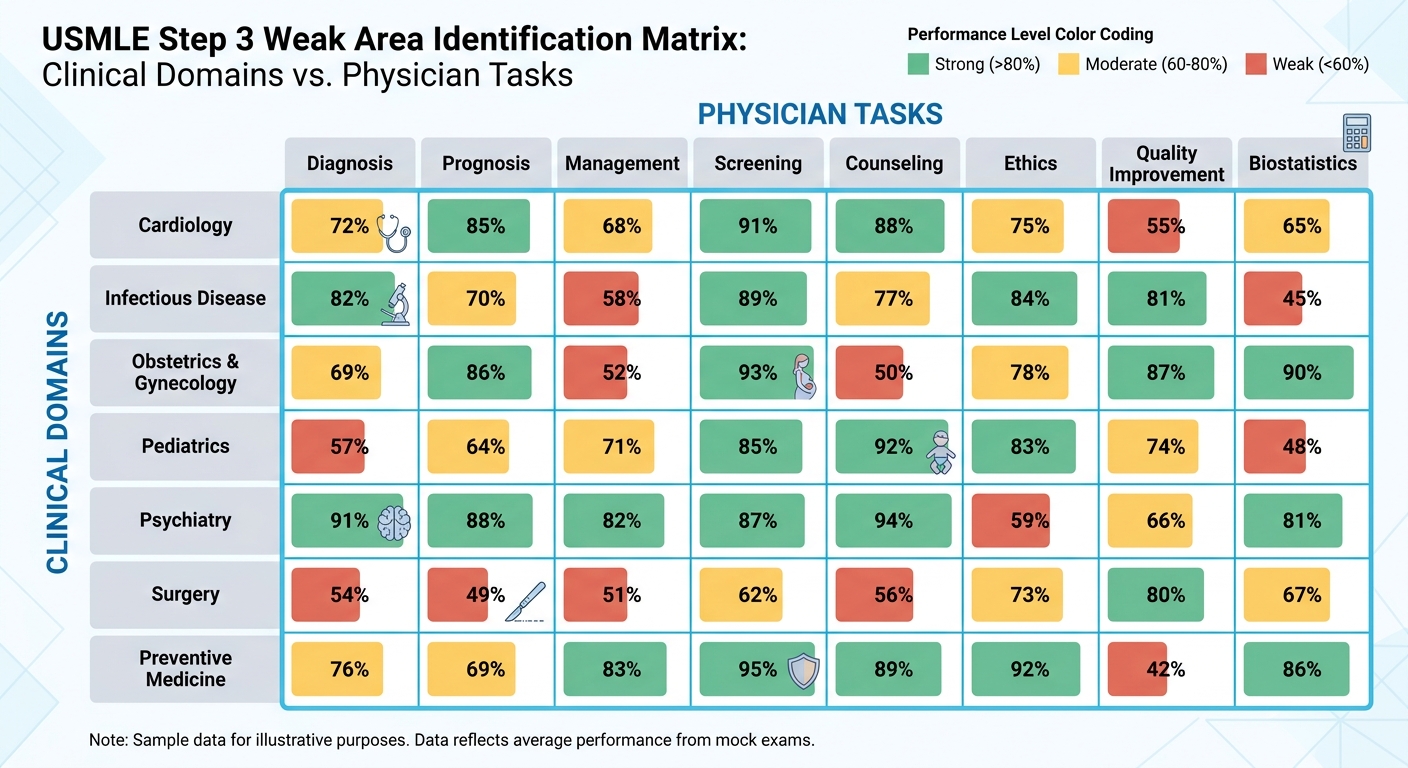
Not all wrong answers represent the same type of problem. Step 3 success requires identifying whether you missed questions due to content gaps, reasoning errors, or test-taking mechanics.
Content Gaps vs Context Errors
True content gaps mean you simply didnt know the medical fact. But Step 3 often tests applying familiar diagnoses to unfamiliar contexts — pregnancy, postoperative status, immunocompromised patients, pediatric presentations.
For example, you might know hypertension management perfectly but miss questions about pregnancy-induced hypertension or postoperative blood pressure control. The disease knowledge is there; the context application is missing.
Timing vs Knowledge Pressure
Some wrong answers result from time pressure, not ignorance. You knew the right approach but rushed through the question stem and missed a crucial detail. These errors need timing practice, not content review.
Track which questions you change from correct to incorrect during your review time. This pattern suggests second-guessing under pressure rather than knowledge deficits.
Algorithm vs Fact Errors
Step 3 heavily tests management algorithms and decision trees. Missing these questions often means you know individual facts but havent internalized the clinical reasoning sequence. You might know that chest pain needs EKG and troponins, but miss the specific timing and sequence for ruling out acute coronary syndrome.
Biostatistics and Ethics Patterns
These domains require different thinking than clinical medicine. Many residents struggle here not because they lack knowledge, but because they apply clinical reasoning to questions that need mathematical or ethical frameworks.
If you consistently miss biostatistics questions, you likely need focused drill practice on sensitivity/specificity calculations and study design, not more clinical content review.
Converting Weak Areas into Targeted Study Plans
Once youve identified your true weak areas, convert them into concrete action plans rather than vague intentions to "study more cardiology."
The 3-5 Rule
Limit your focused improvement to 3-5 specific themes at a time. Common Step 3 weak area categories include:
- Biostatistics interpretation and study design
- Outpatient preventive care and screening guidelines
- Acute management sequences and disposition decisions
- Ethics, systems-based practice, and quality improvement
- CCS time management and order completeness
Focused Block Strategy
For each identified weakness, create focused practice blocks of 15-20 questions targeting that specific domain. Follow focused blocks immediately with mixed practice to ensure you can apply the knowledge under test-like conditions.
Focused practice without mixed application creates false confidence. You might master cardiology questions when you know theyre all cardiology, but still miss them in mixed blocks that mirror actual test conditions.
Weekly Weak Area Rotation
Dedicate 30% of your weekly practice time to your current weakest domain, 40% to mixed practice, and 30% to maintaining your stronger areas. As performance improves in your target weakness, rotate focus to the next priority area.
Oncourse's "Find My Weak Areas" analytics automatically track these patterns and adjust your question distribution accordingly. Instead of guessing which topics need attention, you get data-driven recommendations for where to focus your limited study time.
Building Your Next Revision Cycle
Each practice test should generate a concrete study plan for the following weeks, not just a score to track on your spreadsheet.
The Two-Week Sprint Method
After identifying your priority weaknesses, create a focused two-week improvement plan:
Week 1: Targeted Repair- Days 1-3: 15 focused questions daily in your weakest domain
- Days 4-5: Create and memorize management algorithms for missed topics
- Days 6-7: Mixed practice emphasizing your target areas
- Full mixed blocks daily
- Track improvement in your target domains
- Identify next priority areas for subsequent cycles
CCS Integration Schedule
CCS practice shouldnt be crammed into the final weeks. Schedule 2-3 CCS cases weekly throughout your preparation. Each case should target a different setting: outpatient primary care, emergency department, inpatient acute care.
Time yourself strictly and practice the complete workflow: focused history and physical, initial orders, clock advancement, result interpretation, management adjustments, and disposition decisions.
Creating Portable Rules
Convert each major missed question into a portable test-day rule. These should be one-line decision guides that work under pressure:
- "Unstable patient → stabilize first, diagnose second"
- "Chest pain + normal troponin + low pretest probability → stress testing"
- "Pregnancy + any medication question → check safety category first"
Review Cycle Planning
Plan your review cycles around your test date, not your study start date. If youre testing in 12 weeks, schedule major practice tests at weeks 4, 7, and 10. This gives you time to act on the results rather than just collecting scores.
Each practice test should generate 1-2 weeks of targeted study focus. The final practice test should be pure confirmation, not discovery of new major weaknesses.
Advanced Analytics for Performance Tracking
Raw scores tell you whether youre improving, but granular analytics tell you why and how to optimize your remaining study time.
Domain-Specific Trending
Track performance trends within each clinical domain over time. Your overall score might be improving while specific areas stagnate or decline. Early identification prevents major gaps from developing in your stronger areas while you focus on weak spots.
Question Type Analysis
Step 3 tests different clinical reasoning skills across question types. Track your performance separately for:
- Diagnostic reasoning questions
- Management and treatment decisions
- Prognostic and risk assessment
- Preventive care and screening
- Ethics and systems-based practice
- Biostatistics and research methodology
Time Allocation Analytics
Monitor how your time allocation changes across practice sessions. Improving clinical reasoning should correlate with faster, more confident decision-making. If your times arent improving alongside your scores, you may be developing inefficient test-taking habits.
CCS Performance Metrics
CCS cases generate multiple performance metrics beyond pass/fail. Track your efficiency in ordering appropriate tests, time to correct diagnosis, management completeness, and disposition accuracy. Each metric suggests different improvement strategies.
Frequently Asked Questions
How many practice tests should I take before Step 3?
Most successful candidates complete 4-6 full-length practice tests during their preparation. Start your first practice test after completing 40-50% of your question bank to establish a meaningful baseline. Space subsequent tests 2-3 weeks apart to allow time for targeted improvement between assessments.
Should I review practice tests immediately or wait a day?
Review within 24-48 hours while your reasoning process is still accessible. Immediate review captures your actual thought process; delayed review often leads to rationalization rather than genuine learning. Set aside 2-3 hours for thorough analysis of each practice test.
How do I balance CCS practice with MCQ preparation?
Allocate approximately 70% of study time to MCQs and 30% to CCS practice. Most residents need more MCQ work, but CCS requires consistent practice throughout preparation, not just final-week cramming. Practice 2-3 CCS cases weekly, focusing on different clinical settings and complexity levels.
What if my practice test scores keep fluctuating?
Score fluctuation is normal and often reflects the different clinical domains emphasized in each test. Focus on identifying consistent weak areas across multiple tests rather than chasing score improvements. Stable performance in your strong areas with gradual improvement in weak areas indicates proper preparation.
How do I know when Im ready to schedule my actual test date?
Youre ready when your practice test scores consistently exceed your target score by 10-15 points and your major weak areas have improved to acceptable levels. Most importantly, your confidence in clinical decision-making under time pressure should feel solid, not just your content knowledge.
Should I focus more on my weakest areas or maintain my strengths?
Follow the 70-30 rule: 70% of focused study time on weak areas, 30% maintaining strengths. Completely neglecting strong areas can lead to unexpected score drops, but over-studying comfortable topics wastes precious preparation time.
---
Your Step 3 practice tests are diagnostic tools, not just score generators. Each test reveals specific clinical reasoning gaps that targeted study can address. The residents who pass comfortably treat practice tests as data sources for strategic improvement, not just confidence boosters.
Convert every practice session into actionable intelligence about your clinical decision-making patterns, time management efficiency, and content mastery. Your actual test day performance will reflect this systematic approach to improvement.
Prepare smarter with Oncourse AI — adaptive MCQs, spaced repetition, and AI explanations built for USMLE Step 3. Download free on Android and iOS.