USMLE Step 2 CK Tutoring in 2026: What It Costs, When It's Worth It, and Why Students Are Switching to AI Prep
Discover the real costs of Step 2 CK tutoring in 2026, when human tutors are worth it, and why AI-powered prep is becoming the smarter choice for most students.
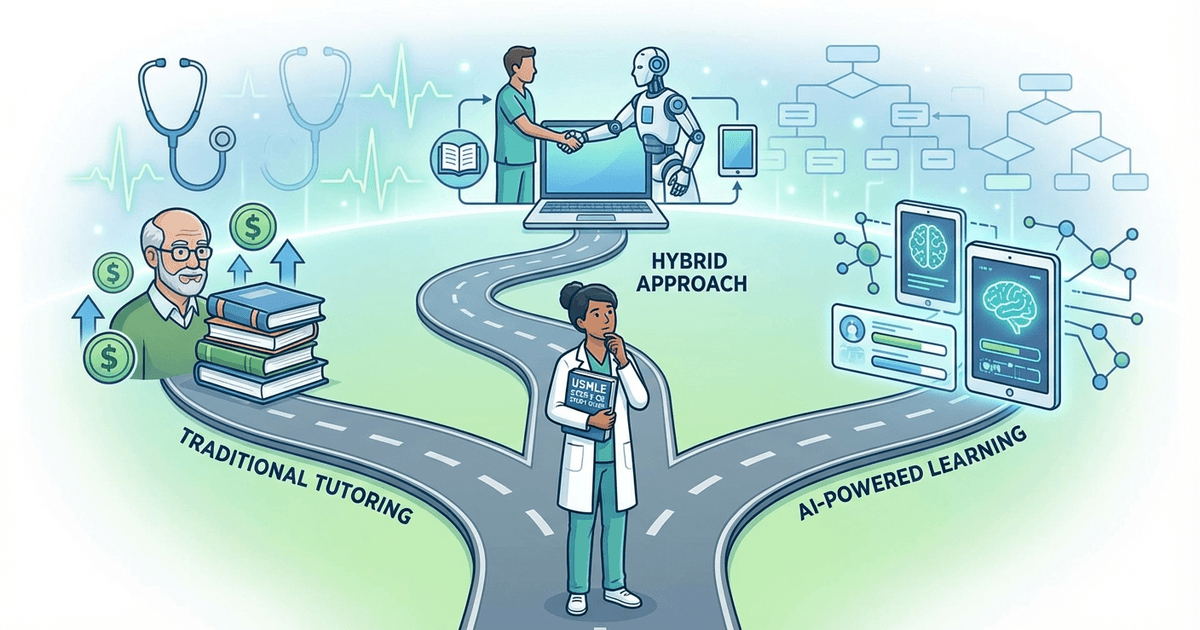
You are probably staring at Step 2 CK prep options and feeling overwhelmed. The traditional advice splits into two camps: "just grind UWorld until your eyes bleed" or "shell out $400 per hour for a tutor who'll hold your hand." Both miss the point.
Here's what nobody tells you: Step 2 CK tutoring in 2026 costs between $75-$500 per hour, most students spend $3,000-$8,000 on packages, and 70% of those who hire tutors still dont get the personalized feedback loop they actually need. Meanwhile, adaptive AI platforms now deliver the same clinical reasoning depth at a fraction of the cost.
This isnt about replacing human expertise where it matters. Its about understanding when tutoring genuinely adds value versus when structured, AI-powered prep gets you the same result for less money and more flexibility.
What Step 2 CK Tutoring Actually Costs in 2026
Let me give you the real numbers, because the pricing varies wildly and most platforms dont publish them upfront.
Hourly Rates by Tutor Type
Medical residents/junior attendings: $75-$150/hour
Usually 1-3 years out of residency
Good for specific weak areas
Limited availability due to work schedules
Experienced physicians: $200-$350/hour
5+ years post-residency experience
Strong clinical knowledge but variable teaching skills
Higher consistency but premium pricing
Professional test prep tutors: $150-$500/hour
Dedicated to USMLE prep
Know the exam format inside out
Best teaching methodology but highest cost
Package Costs (What Students Actually Pay)
Most tutoring happens through packages, not hourly sessions. Here's the breakdown:
Package Type | Duration | Total Cost | Hours Included |
|---|---|---|---|
Basic Review | 4-6 weeks | $2,500-$4,000 | 15-20 hours |
Comprehensive Prep | 8-12 weeks | $4,500-$8,000 | 25-35 hours |
Intensive Coaching | 12-16 weeks | $6,000-$12,000 | 40-60 hours |
The hidden costs add up: scheduling software fees ($50-100), platform access ($200-400), and makeup session charges ($75-150 per reschedule).
Most students end up in the $4,000-$6,000 range for 2-3 months of prep. That's without factoring in your UWorld subscription, First Aid, or other resources you'll still need.
When Human Tutoring Is Actually Worth It
Tutoring isnt inherently bad. There are specific scenarios where a human tutor provides irreplaceable value:
Clinical Reasoning Gaps
If you consistently miss questions not because you dont know the facts, but because you cant connect symptoms to pathophysiology, a good tutor helps bridge that gap. They walk through clinical decision trees in real-time and catch reasoning errors you wouldn't spot alone.
Severe Test Anxiety
Some students freeze on timed exams despite knowing the material cold. Experienced tutors help with test-taking strategies, time management under pressure, and building confidence through structured practice.
Failed Previous Attempts
If you've already taken Step 2 CK and scored below your target, a tutor helps identify specific knowledge gaps and weak clinical areas. They provide accountability and prevent you from repeating the same study mistakes.
Non-Traditional Medical Background
IMG students or those who took extended breaks between clinical years and Step 2 CK often benefit from structured review with someone who understands the US clinical approach.
The Hidden Problem with Traditional Tutoring
Here's what most students discover too late: even expensive tutors cant scale the feedback you actually need.
Step 2 CK success comes from doing thousands of practice questions and understanding why each wrong answer was wrong. A tutor can explain 10-20 questions per hour session. But you need explanations for hundreds of questions per week.
When you get a nephrology question wrong at 11 PM on a Tuesday, you cant text your $300/hour tutor. You either look up a basic explanation or move on. That's where the learning opportunity dies.
The adaptive feedback loop — immediate clinical reasoning explanations for every single question — is what separates students who score 250+ from those who plateau in the 230s. Most tutoring packages dont provide this because its impossible to scale human attention to that level.
How AI-Powered Prep Changes the Game
This is where AI platforms like Oncourse have fundamentally shifted the equation. Instead of scheduling weekly calls to ask why a patient has type 4 RTA instead of type 1, you can probe the AI tutor in real-time while reviewing any clinical concept.
The Rezzy AI feature lets you ask follow-up questions like "walk me through the aldosterone pathway step by step" or "why would this patient develop hyperkalemia here" instantly on any lesson. That's the kind of on-demand clinical reasoning help that used to require booking a tutor session.
Similarly, when you miss a cardiology question about heart failure management, the Explanation Chat feature lets you immediately ask "why was ACE inhibitor wrong here and what's the underlying mechanism." You get tutor-quality clinical explanations at 2 AM when you're actually studying.
The Daily Plan Advantage
The biggest gap traditional tutors fill is "telling you what to study next." Most students hire tutors because they feel lost in the massive Step 2 CK content universe and need someone to create structure.
Oncourse's adaptive Daily Plan does exactly that — it analyzes your weak areas from question performance and builds a personalized day-by-day schedule. Instead of wondering "should I review more cardiology or move to infectious disease," the AI tells you based on your actual performance data.
This removes the most paralyzing part of self-directed prep while adapting as you improve. Traditional tutors update your study plan once per week during sessions. AI-powered platforms adjust it every day based on your latest practice scores.
Building a Self-Directed Step 2 CK Study Plan
If you decide against tutoring, here's how to structure effective self-study without losing the benefits of personalized guidance:
Phase 1: Foundation Building (Weeks 1-4)
Start with comprehensive content review using high-yield lessons organized by clinical specialty. Focus on understanding pathophysiology and clinical presentations before jumping into questions.
Phase 2: Active Practice (Weeks 5-10)
Begin mixed practice questions across all clinical areas. Target 80-120 questions daily with immediate review of explanations. Use specialty-specific question banks to drill weak areas identified in Phase 1.
Phase 3: High-Yield Review (Weeks 11-12)
Switch to spaced repetition with targeted flashcards for rapid fact retention. Focus on high-yield clinical pearls and decision algorithms rather than memorizing obscure details.
Phase 4: Exam Simulation (Weeks 13-16)
Take full-length practice exams under timed conditions. Analyze performance patterns and adjust study priorities accordingly. Review frequently missed clinical scenarios using case-based questions.
Cost Comparison: Tutoring vs AI Prep vs Hybrid
Let's break down the real numbers for a typical 3-4 month Step 2 CK prep:
Approach | Total Cost | Personalized Feedback | Scheduling Flexibility | Content Coverage |
|---|---|---|---|---|
Full Tutoring | $4,000-$8,000 | High quality, limited quantity | Tutor's availability only | Guided but time-limited |
AI-Powered Prep | $200-$400 | Unlimited, instant access | 24/7 availability | Comprehensive, adaptive |
Hybrid (AI + 5 tutor sessions) | $1,200-$2,000 | Best of both worlds | Mostly flexible | Full coverage + targeted help |
The hybrid approach increasingly makes the most sense. Use AI platforms for daily study structure and instant explanations, then book 5-10 tutor sessions for specific clinical reasoning gaps or exam strategy refinement.
When Students Switch from Tutors to AI (and Why)
Based on patterns we see, students typically switch from traditional tutoring to AI-powered prep for these reasons:
Scheduling Constraints: Medical students have unpredictable schedules. Missing a $200 tutor session because of a last-minute rotation change feels expensive. Explanation Timing: Learning happens when you're actively confused by a question, not during a scheduled review session three days later. Volume Limitations: Tutors can review 15-20 questions per hour. AI platforms let you get explanations for 100+ questions in the same timeframe. Cost Efficiency: Students realize they're paying premium rates for study schedule planning and basic explanations that adaptive software delivers better.
Red Flags: When Tutoring Becomes Counterproductive
Watch for these warning signs that your tutor arrangement isnt working:
Sessions focus more on content review than clinical reasoning practice
Your tutor cant explain why wrong answers are wrong beyond reading official explanations
You feel dependent on weekly sessions instead of building independent study skills
Progress stalls despite consistent tutoring over 6+ weeks
The tutor pushes their preferred prep materials instead of what works for your learning style
Making the Decision: Framework for Choosing Your Approach
Use this decision tree:
Choose full tutoring if:
You've failed Step 2 CK previously
Severe test anxiety affects your performance
You need external accountability to study consistently
Budget isnt a primary concern ($5,000+ available)
Choose AI-powered prep if:
You study effectively with structured guidance
You want immediate explanations while practicing
Budget is a consideration (under $500)
You have unpredictable scheduling demands
Choose hybrid approach if:
You want cost efficiency with targeted human help
You have 1-2 specific weak clinical areas
You prefer mostly self-directed study with occasional expert input
Budget allows $1,000-$2,000 for prep
Frequently Asked Questions
How much does Step 2 CK tutoring typically cost?
Most students spend $4,000-$6,000 for comprehensive tutoring packages lasting 2-3 months. Hourly rates range from $75-$500 depending on the tutor's experience and credentials.
Is it worth paying for expensive USMLE Step 2 CK tutors?
High-cost tutoring is worth it if you have specific clinical reasoning gaps, severe test anxiety, or failed previous attempts. For most students, AI-powered prep with adaptive explanations provides better value.
Can I prepare for Step 2 CK without a tutor?
Absolutely. Most successful students use self-directed study with structured question practice and immediate explanations. AI platforms now provide the personalized feedback that tutors traditionally offered.
How do I know if I need Step 2 CK tutoring?
Consider tutoring if you consistently miss questions due to clinical reasoning errors (not knowledge gaps), have severe test anxiety, or scored significantly below your target on practice exams.
What's the best alternative to expensive Step 2 CK tutors?
AI-powered prep platforms offer unlimited explanations, adaptive study plans, and 24/7 availability at a fraction of tutoring costs. Many students combine this with 5-10 targeted tutor sessions for specific weak areas.
How long should Step 2 CK tutoring last?
Effective tutoring typically spans 8-12 weeks with 20-30 total hours. Longer arrangements often indicate dependency rather than skill-building. Focus on developing independent clinical reasoning abilities.
The landscape of Step 2 CK preparation has fundamentally changed. While human tutors still provide value for specific scenarios, AI-powered platforms now deliver the personalized, scalable feedback that most students actually need — at a fraction of the cost and with complete scheduling flexibility.
Prepare smarter with Oncourse AI — adaptive MCQs, spaced repetition, and AI explanations built for USMLE Step 2 CK. Download free on Android and iOS.