USMLE Step 1 Immunology: High-Yield Topics, Practice Strategy and Weak-Area Review
Master USMLE Step 1 immunology with high-yield topics, question-first practice loops, missed question analysis, and targeted weak-area review strategies that convert gaps into strengths.
USMLE Step 1 Immunology: High-Yield Topics, Practice Strategy and Weak-Area Review
You're staring at an immunology question about a child with recurrent infections, trying to choose between DiGeorge syndrome and SCID. The stem mentions absent thymic shadow and hypocalcemia, but you hesitate because you've missed similar questions before. This exact scenario — knowing the facts but missing the pattern — is why immunology feels so frustrating on USMLE Step 1.
Here's what actually works: immunology accounts for 10-15% of Step 1 questions, but the concepts appear everywhere. A cardiology question might hinge on complement activation in myocardial infarction. A dermatology stem could test hypersensitivity mechanisms. The key isn't memorizing more lists — it's building a question-first practice loop that converts missed items into targeted weak-area sessions.
What Makes Immunology High-Yield for Step 1
Step 1 tests immunology through three main patterns: mechanism-based reasoning, cross-system integration, and clinical pattern recognition. You'll see ~25-30 dedicated immunology questions plus another 15-20 where immune concepts determine the correct answer.
The most testable areas break down into clear tiers:
Tier 1 (Master First):
T-cell vs B-cell development and selection
Four hypersensitivity types with classic examples
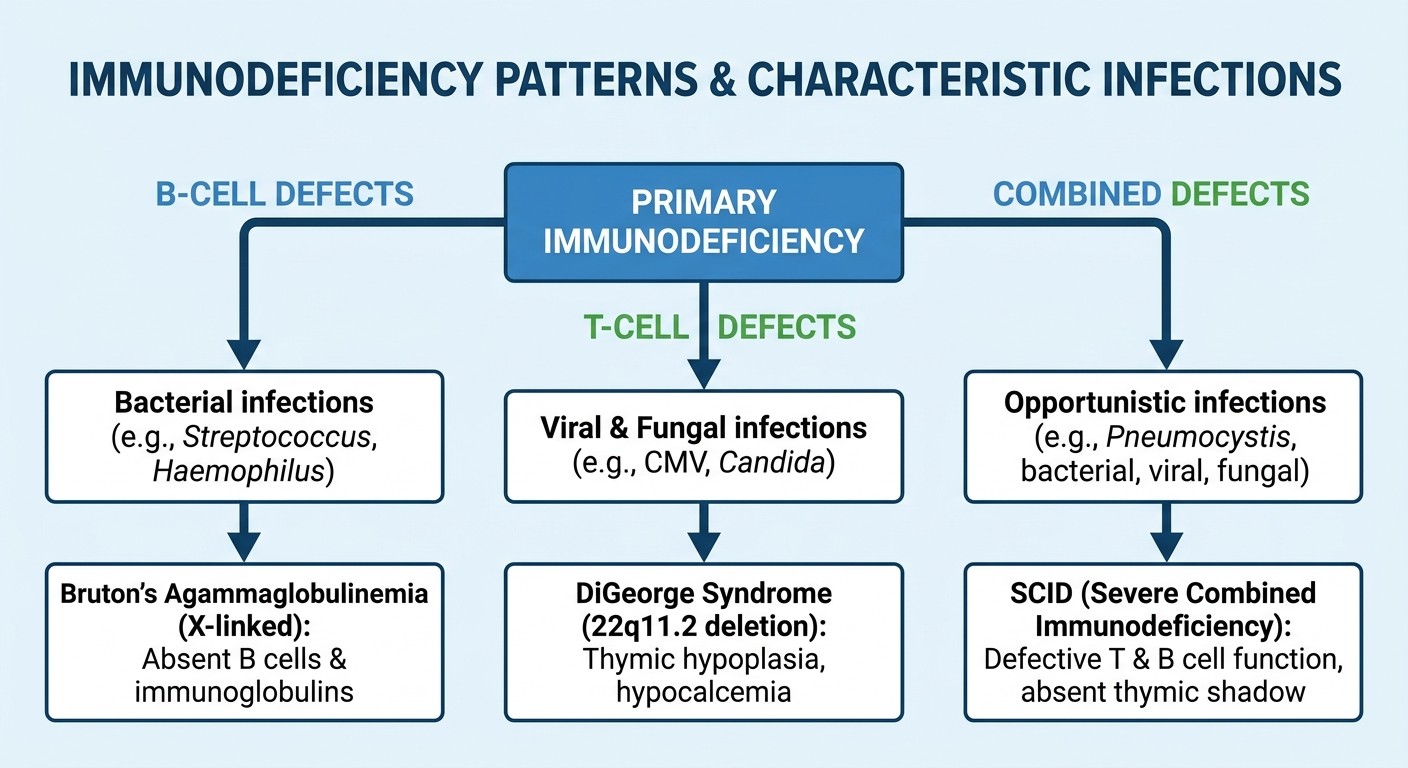
Primary immunodeficiency patterns and infection susceptibilities
Core cytokines (IL-2, IL-4, IL-5, IL-6, IL-12, TNF-α, IFN-γ)
MHC class I vs II presentation pathways
Tier 2 (High-Yield):
Specific immunodeficiency syndromes (DiGeorge, SCID, Bruton, CGD)
Complement pathways and deficiency patterns
Autoimmune disease mechanisms and autoantibody associations
Transplant rejection types and timelines
Vaccine types and contraindications
Tier 3 (Know for Integration):
Tumor immunology and immune surveillance
Immunosuppressive drug mechanisms
Advanced cytokine networks (Th1/Th2/Th17/Treg balance)
The pattern here isn't random. Step 1 writers love questions where you identify which immune component failed based on the infection pattern or clinical presentation.
Core Immune Cells and Cytokines You Must Know
Essential T-Cell Subsets
CD4+ Helper T Cells:
Th1: IFN-γ, IL-2 → macrophage activation, intracellular pathogens
Th2: IL-4, IL-5, IL-13 → allergic responses, IgE class switching
Th17: IL-17, IL-22 → neutrophil recruitment, extracellular bacteria
Treg: IL-10, TGF-β → immune suppression, prevent autoimmunity
CD8+ T Cells:
Cytotoxic function via perforin/granzyme
Recognize intracellular antigens on MHC class I
Activated by IL-2 from CD4+ cells
When Oncourse AI's Rezzy tutor explains complex T-cell interactions, it breaks down exactly which subset responds to specific infection patterns — essential for those "recurrent infection" question stems.
High-Yield Cytokines
Cytokine | Source | Primary Function | Step 1 Context |
|---|---|---|---|
IL-1 | Macrophages | Fever, acute phase | Sepsis, inflammation |
IL-2 | Th1 cells | T-cell proliferation | T-cell activation disorders |
IL-4 | Th2 cells | IgE class switching | Allergic asthma, atopy |
IL-5 | Th2 cells | Eosinophil activation | Parasitic infections, allergies |
IL-6 | Macrophages | Acute phase proteins | CRP elevation, fever |
IL-12 | Dendritic cells | Th1 differentiation | Mycobacterial immunity |
TNF-α | Macrophages | Inflammation, cachexia | RA, granuloma formation |
IFN-γ | Th1, NK cells | Macrophage activation | Intracellular pathogens |
Hypersensitivity Reactions: The ACID Framework
Type I reactions happen within minutes via IgE and mast cells. Think anaphylaxis to peanuts or bee stings. The mechanism: previous exposure sensitizes, repeat exposure triggers degranulation.
Type II involves IgG/IgM antibodies against cell surface antigens. Examples include ABO incompatibility, Goodpasture syndrome, and myasthenia gravis. Time frame: hours to days.
Type III creates immune complexes that deposit in tissues. SLE, serum sickness, and arthus reactions follow this pattern. Complement activation drives inflammation over days to weeks.
Type IV is T-cell mediated and delayed. Contact dermatitis, TB skin tests, and transplant rejection use this pathway. Peak response occurs 48-72 hours after exposure.
For practice questions, focus on timing and the type of immune component involved. A question mentioning "immediate reaction" with wheezing points to Type I. "Delayed skin reaction" suggests Type IV.
Primary Immunodeficiencies: Pattern Recognition
Step 1 loves immunodeficiency questions because they test your understanding of which immune component does what. The key is matching infection patterns to the defective pathway.
B-Cell Defects
X-linked Agammaglobulinemia (Bruton):
No mature B cells due to BTK gene mutation
Recurrent bacterial infections after 6 months (when maternal antibodies wane)
Normal fungal and viral immunity initially
Common Variable Immunodeficiency (CVID):
Late-onset hypogammaglobulinemia
Recurrent sinopulmonary infections
Increased autoimmunity and malignancy risk
T-Cell Defects
DiGeorge Syndrome:
22q11.2 deletion affecting thymic development
Absent thymic shadow, hypocalcemia (parathyroid involvement)
Viral and fungal infections, normal antibody response initially
Severe Combined Immunodeficiency (SCID):
Multiple genetic causes affecting T-cell development
Early opportunistic infections (Pneumocystis, candida)
"Boy in the bubble" presentation
Combined Defects
Ataxia-Telangiectasia:
ATM gene mutation affecting DNA repair
Progressive cerebellar ataxia plus immunodeficiency
Increased cancer risk, elevated AFP
The pattern-matching approach works because Step 1 questions give you the clinical presentation and expect you to identify which immune component failed.
When reviewing missed immunodeficiency questions, use targeted flashcards through Synapses to drill the infection pattern → deficiency association. Each card should connect the specific bug type to the immune pathway that normally handles it.
Building a Question-First Study Loop
Traditional immunology study follows this sequence: read First Aid → watch videos → do questions. This backwards approach explains why you recognize facts but miss applications.
The Question-First Loop: 1. Start with questions in tutor mode (untimed, immediate feedback) 2. Classify each miss before reading explanations 3. Extract one mechanism from each missed question 4. Create targeted review cards based on gaps 5. Schedule spaced review of weak topics 6. Retest similar question types after delay
Question Classification System
Knowledge Gap: You didn't know DiGeorge syndrome affects calcium regulation. Fix: Create mechanism card linking 22q11.2 deletion → absent parathyroids → hypocalcemia Mechanism Gap: You knew the facts but couldn't connect thymic aplasia to viral infections. Fix: Draw the pathway from T-cell development → cellular immunity → viral clearance Pattern Recognition Gap: You missed the classic "absent thymic shadow" clue. Fix: List the pathognomonic findings for each immunodeficiency Integration Gap: You didn't recognize how immunology appears in other subjects. Fix: Practice cross-system questions (cardio + complement, derm + hypersensitivity)
Converting Misses into Daily Weak-Area Sessions
After each practice block, categorize your misses by gap type and create targeted study sessions:
Monday - Cytokine Functions: 20 minutes drilling IL-4 vs IL-5, IFN-γ pathways, complement activation Tuesday - Immunodeficiency Patterns: 20 minutes connecting bug types to immune defects Wednesday - Hypersensitivity Timing: 20 minutes practicing Type I vs III vs IV recognition Thursday - Cross-System Integration: 20 minutes on cardiology stems with immune components Friday - Weak Spot Review: 20 minutes retesting your worst-performing topics
Oncourse AI's Daily Plan feature automatically routes your weak immunology topics into personalized study sessions, adjusting the content mix based on your recent performance patterns.
Vaccines and Immunization Logic
Step 1 tests vaccine concepts through contraindications, immune mechanisms, and population health principles.
Live vs Killed Vaccines
Live Attenuated (MMR, Varicella, Rotavirus):
Contraindicated in immunocompromised patients
Can cause mild disease in recipients
Provide strong, lasting immunity
May shed and potentially infect others
Inactivated (Polio IPV, Hepatitis A, Influenza injection):
Safe in immunocompromised patients
Cannot cause disease
May require boosters for sustained immunity
Cannot shed to others
Toxoid (Tetanus, Diphtheria):
Inactivated bacterial toxins
Safe in all patients
Require scheduled boosters
The pattern for questions: immunocompromised patient needs vaccination → avoid live vaccines. Pregnant patient → avoid live vaccines. Otherwise, follow standard schedules.
Transplant Immunology: Rejection Types and Timing
Transplant questions test your understanding of different rejection mechanisms and their timelines.
Hyperacute Rejection (Minutes to Hours):
Pre-existing antibodies against donor antigens
Immediate thrombosis and graft necrosis
ABO incompatibility or prior sensitization
Prevented by crossmatching
Acute Cellular Rejection (Days to Weeks):
T-cell mediated response to foreign MHC
Lymphocytic infiltrate on biopsy
Responds to increased immunosuppression
Most common type tested
Acute Humoral Rejection (Days to Weeks):
De novo antibody formation against donor
C4d deposition in capillaries
Harder to treat than cellular rejection
Chronic Rejection (Months to Years):
Fibrosis and scarring
"Chronic allograft nephropathy" in kidney
Progressive function decline
Limited treatment options
When working through transplant questions, focus on timing clues and histologic findings. "Immediate" points to hyperacute. "Lymphocytes" suggests acute cellular.
Autoimmune Disease Mechanisms
Step 1 approaches autoimmunity through molecular mimicry, loss of tolerance, and specific autoantibody patterns.
High-Yield Autoantibody Associations
Systemic Lupus Erythematosus:
ANA (screening), anti-dsDNA (specific)
Anti-Sm (specific but less sensitive)
Type III hypersensitivity mechanism
Rheumatoid Arthritis:
Rheumatoid factor (IgM against IgG)
Anti-CCP (more specific than RF)
Synovial inflammation and pannus formation
Sjögren Syndrome:
Anti-Ro/SSA and anti-La/SSB
Dry eyes and mouth
Increased lymphoma risk
Myasthenia Gravis:
Anti-acetylcholine receptor antibodies
Muscle weakness that worsens with use
Thymic abnormalities common
The pattern for autoimmune questions: clinical presentation + specific autoantibody = diagnosis. Don't just memorize the associations — understand why certain antibodies cause specific symptoms.
Immunology in Cross-System Questions
Immunology concepts appear throughout Step 1, often disguised within other subjects. Recognizing these patterns separates high scorers from average performance.
Cardiology + Immunology
Post-MI pericarditis via complement activation
Rheumatic fever molecular mimicry (M protein vs cardiac myosin)
Infective endocarditis immune complex formation
Dermatology + Immunology
Contact dermatitis (Type IV hypersensitivity)
Drug eruptions (various hypersensitivity types)
Autoimmune blistering diseases (pemphigus, bullous pemphigoid)
Infectious Disease + Immunology
Opportunistic infections in specific immunodeficiencies
Vaccine-preventable disease outbreaks
Post-infectious glomerulonephritis (immune complex deposition)
When you encounter these integrated questions, ask: "What immune mechanism explains this pathology?" This approach converts memorized facts into mechanistic understanding.
If you're struggling with complex explanations that span multiple systems, Oncourse AI's Explanation Chat feature lets you ask follow-up questions about confusing mechanisms without getting lost in textbook details.
Spaced Repetition Strategy for Immunology
Immunology facts demand spaced repetition because the concepts build on each other. A traditional flashcard approach fails because it treats each fact in isolation.
Effective Immunology Card Types
Mechanism Cards: Front: "Child with absent thymic shadow and hypocalcemia" Back: "DiGeorge syndrome - 22q11.2 deletion affects thymus AND parathyroid development" Pattern Cards: Front: "Recurrent Strep pneumoniae infections after age 2" Back: "B-cell defect - normal T-cell function explains delayed onset after maternal antibodies wane" Integration Cards: Front: "Post-MI patient develops chest pain and friction rub 2 weeks later" Back: "Dressler syndrome - autoimmune pericarditis triggered by cardiac antigen exposure"
Spacing Intervals for Immunology
Day 1: Learn new concept through missed question analysis Day 3: First review - can you explain the mechanism? Day 7: Second review - can you apply to similar cases? Day 14: Third review - can you integrate with other systems? Day 30: Final review - long-term retention check
The key difference from generic spaced repetition: immunology cards should connect to clinical vignettes, not isolated facts.
Final Sprint Strategy: 90/60/30/14/7 Day Plans
Your immunology approach should shift based on time remaining. Each phase targets different aspects of mastery.
90 Days Out: Foundation Building
Complete First Aid immunology chapter with active reading
Start question bank in tutor mode, untimed
Create mechanism-based flashcards for missed concepts
Focus on Tier 1 topics exclusively
60 Days Out: Integration Phase
Mix immunology questions with other subjects
Practice recognizing immune concepts in cardiology, dermatology, infectious disease stems
Add Tier 2 topics to daily review
Start timed question blocks
30 Days Out: Pattern Recognition
Focus on question stems that test immunodeficiency vs autoimmunity vs hypersensitivity
Practice rapid categorization of clinical scenarios
Drill high-yield mnemonics and associations
Complete Tier 3 topics
14 Days Out: Weak Spot Elimination
Identify your 3-5 weakest immunology topics
Create targeted mini-sessions for each weak area
Practice only your worst-performing question types
Review your most-missed cards daily
7 Days Out: Confidence Building
Light review of core concepts only
Avoid learning new immunology facts
Focus on timing and test-taking strategy
Trust your preparation and maintain routine
Common Mistakes That Tank Immunology Scores
Memorizing Lists Without Mechanisms
Wrong approach: "DiGeorge syndrome causes recurrent infections"
Right approach: "Absent thymus → no T-cell development → viral/fungal susceptibility"
Skipping Incorrect Answer Choices
After selecting the right answer, review why each wrong choice is wrong. This builds pattern recognition for similar questions.
Not Tagging Weak Topics
Use your question bank's tagging system to mark immunology subtopics where you're weak. Return to these specifically during review sessions.
Over-Reviewing Comfortable Material
If you consistently nail hypersensitivity questions but miss immunodeficiency patterns, spend 80% of your time on immunodeficiency, not hypersensitivity.
Passive Reading During Review
Reading explanations without active engagement doesn't improve performance. Instead, explain the mechanism out loud or teach it to someone else.
The solution for each mistake is the same: question-first practice with immediate classification of errors and targeted weak-area review.
Advanced Practice: Question Stem Analysis
High-performing students read immunology questions differently. They identify the immune component being tested before looking at answer choices.
Stem Reading Strategy
Step 1: Identify the Patient
Age, immunization status, family history, concurrent medications
Step 2: Categorize the Clinical Picture
Recurrent infections → immunodeficiency
Immediate reaction → Type I hypersensitivity
Delayed reaction → Type IV hypersensitivity
Autoantibodies → autoimmune disease
Step 3: Determine the Immune Component
Which part of the immune system handles this type of pathogen or reaction?
Step 4: Select Based on Mechanism
Choose the answer that best explains the underlying immunologic mechanism
This approach prevents getting distracted by irrelevant details and focuses your attention on the testable immunology concept.
Frequently Asked Questions
How much time should I spend on immunology daily during Step 1 prep?
Dedicate 20-30 minutes daily to focused immunology review, plus whatever immunology questions appear in your mixed practice blocks. The key isn't volume — it's consistency and targeting your weak areas.
Should I memorize all the cytokine functions and sources?
Focus on the "star cytokines" that appear repeatedly: IL-1, IL-2, IL-4, IL-5, IL-6, IL-12, TNF-α, and IFN-γ. Know their primary source, main function, and clinical context. Skip the rare ones unless they keep appearing in your missed questions.
How do I remember all the immunodeficiency syndromes?
Don't memorize them as isolated facts. Instead, learn the pattern: what type of infections does the patient get? That tells you which immune component is broken. Then connect the syndrome name to the defective pathway.
Is complement important for Step 1?
Yes, but focus on the clinical associations rather than the detailed biochemistry. Know that classical pathway deficiencies predispose to SLE and that alternative pathway defects cause increased Neisseria infections. Skip the detailed molecular steps unless you're consistently missing complement questions.
How can I improve at immunology questions that cross over into other subjects?
Practice recognizing the immunologic component in non-immunology questions. A cardiology stem about post-MI complications might hinge on understanding autoimmune mechanisms. The key is asking "what immune process explains this pathology?" for every clinical scenario.
Should I use different resources for immunology than other Step 1 topics?
Stick with your primary resources (First Aid plus question bank) but supplement with targeted tools for weak areas. If you struggle with immunodeficiency patterns, create visual flowcharts. If cytokine functions are your weakness, use spaced repetition cards. Match your study method to your specific gaps.
---
Prepare smarter with Oncourse AI — use Rezzy to clarify confusing immunology explanations, leverage Explanation Chat for follow-up questions about complex mechanisms, review high-yield concepts with Synapses flashcards, and route your weak immunology topics into targeted Daily Plan sessions. Download free on Android and iOS.