Blog
Our resources and updates
Study Techniques
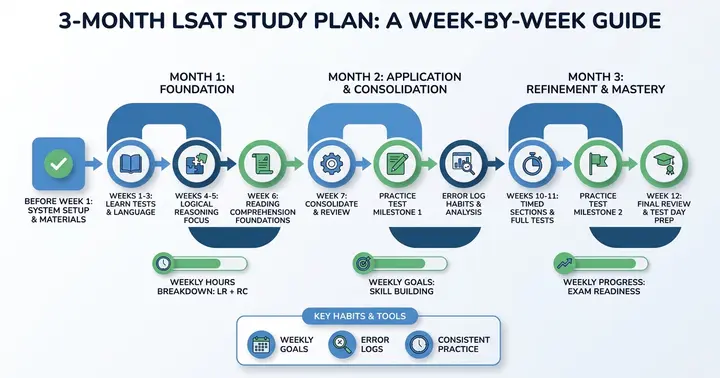
How to Study for the LSAT: A 3-Month Week-by-Week Plan
A realistic 12-week LSAT study plan with weekly goals, practice test milestones, error-log habits and a hours-per-week breakdown for Logical Reasoning and RC.
Exam Guide
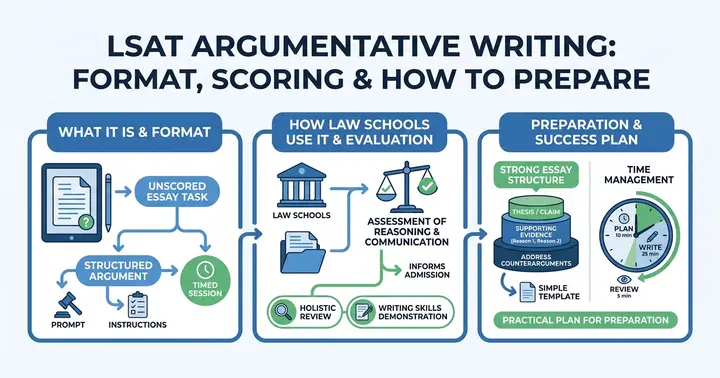
LSAT Argumentative Writing: Format, Scoring and How to Prepare
Everything about LSAT Argumentative Writing: what the unscored essay is, how it works, how law schools use it and a practical plan to prepare with sample structure.
Study Techniques
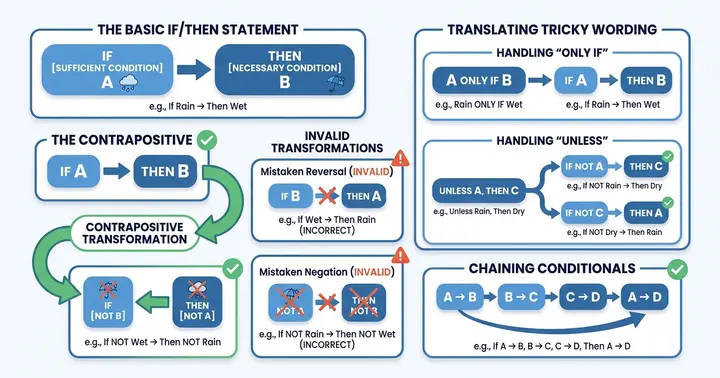
LSAT Conditional Logic: If/Then, Contrapositive, Unless and Only If
Master LSAT conditional logic: translate if/then, only if and unless statements, form contrapositives, chain rules and avoid the classic reversal trap.
Exam Preparation
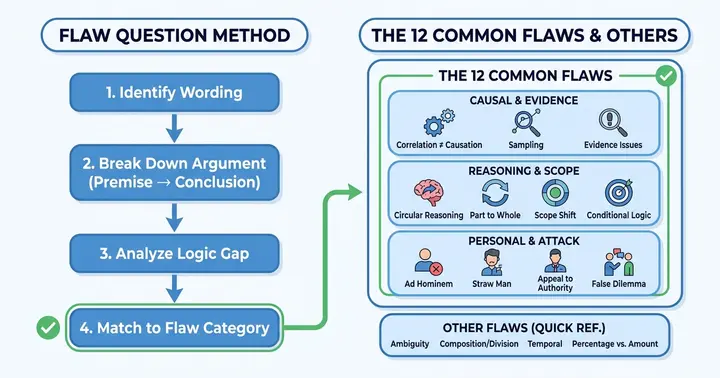
LSAT Flaw Questions: The 12 Most Common Flaws With Examples
Learn the 12 most common flaws on LSAT flaw questions, from correlation vs causation to ad hominem, each with a plain-language example and how to spot it.
Exam Guide
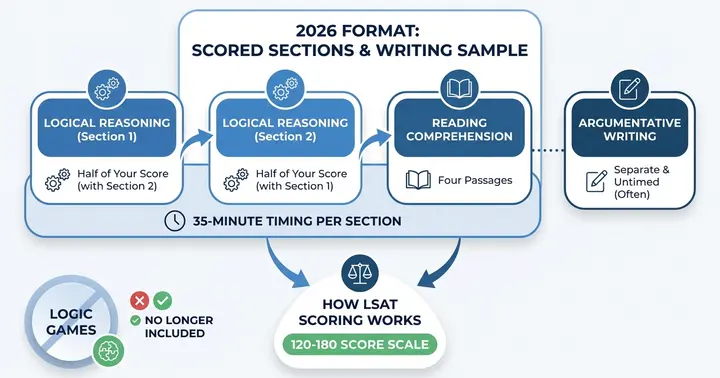
LSAT Format 2026: Sections, Timing and Scoring Explained
The LSAT has no logic games anymore. See the 2026 LSAT format: sections, question counts, 35-minute timing, 120-180 scoring and the separate writing sample.
Exam Preparation
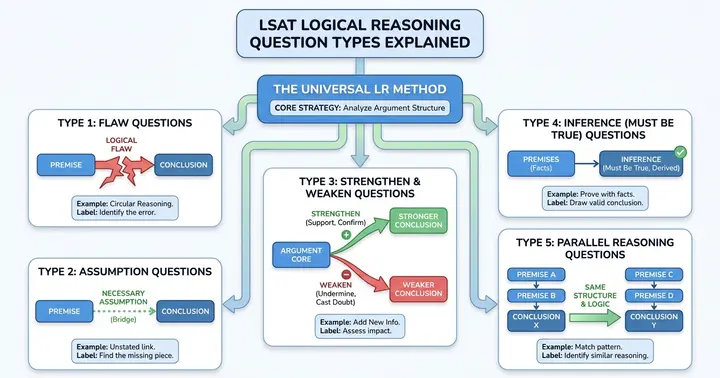
LSAT Logical Reasoning Question Types Explained with Examples
Learn the five core LSAT Logical Reasoning question types, flaw, assumption, strengthen/weaken, inference and parallel, with mini worked examples and strategy.
Exam Preparation
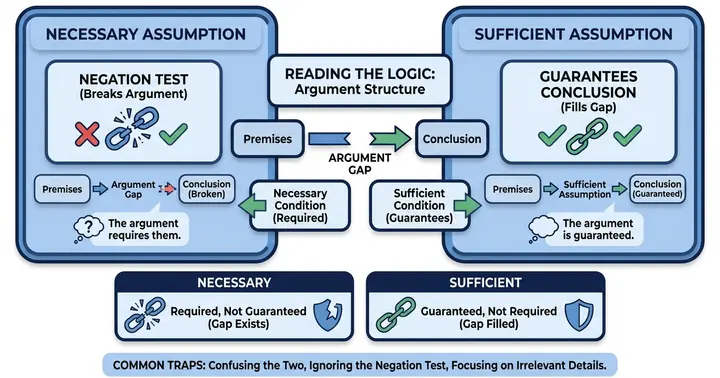
Necessary vs Sufficient Assumption Questions on the LSAT
Learn the difference between necessary and sufficient assumption questions on the LSAT, with the negation test, worked examples and tips to avoid common traps.
Exam Preparation
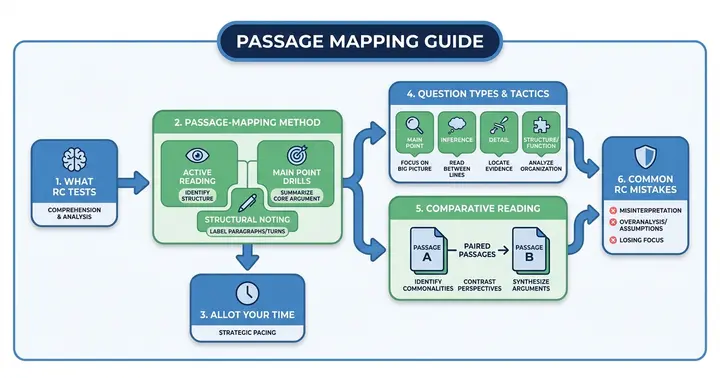
LSAT Reading Comprehension Strategies: Passage Mapping Guide
Improve your LSAT Reading Comprehension score with passage mapping, main-point drills, question-type tactics and a method for comparative passages.
Study Techniques
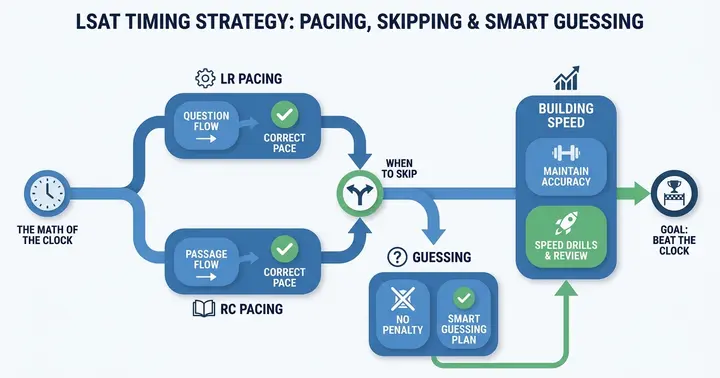
LSAT Timing Strategy: Pacing, Skipping and Smart Guessing
Beat the clock on the LSAT: pacing benchmarks for Logical Reasoning and Reading Comprehension, when to skip, how to guess and a plan to build speed.
Exam Guide
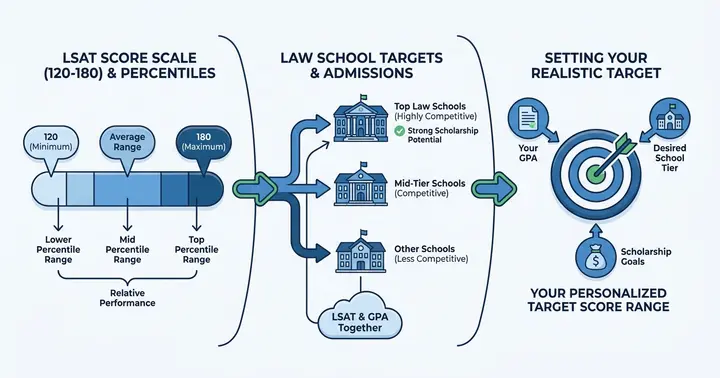
What Is a Good LSAT Score? Percentiles and Law School Targets
What counts as a good LSAT score? See how the 120-180 scale and percentiles work, what law schools look for, and how to set a realistic target score.